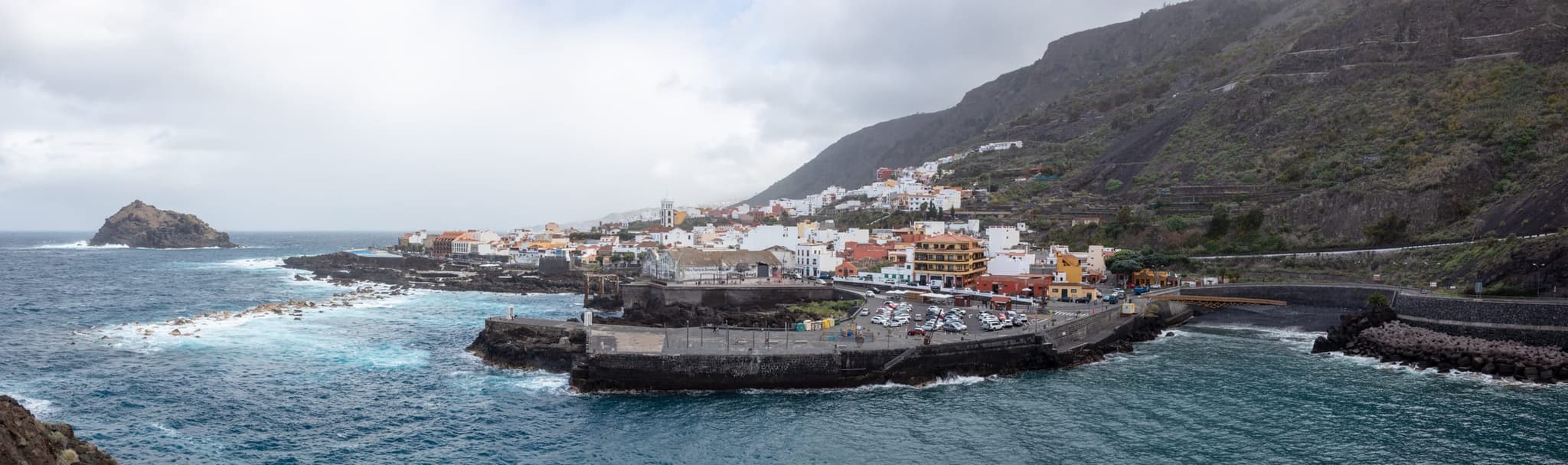
Garachico
A former port rebuilt after an eruption, with the Caletón natural pools and one of Spain’s most beautiful villages.
History
The Villa y Puerto de Garachico, on the north-western coast of Tenerife, was born shortly after the island's conquest (completed in 1496), when the Genoese banker Cristóbal de Ponte (Genoa, 1447 - Tenerife, 1532) promoted the founding of its settlement and, above all, of its port. De Ponte had been one of the Italian financiers who funded the Castilian conquest led by Alonso Fernández de Lugo, and in return he received generous land grants in the fertile region of Daute. The place name comes from the Guanche root «gara» ('rock' or 'hill'), joined to the element «-ico», whose meaning is unknown; this «-ico» does not derive from the Castilian word «chico» ('small').
During the 16th and 17th centuries, Garachico lived its golden age and became the main commercial port of Tenerife. Its wide, sheltered cove led the engineer Leonardo Torriani, at the end of the 16th century, to consider it the island's finest anchorage. From its quays sailed ships laden with malvasía wine and sugar bound for the markets of Europe and America. The sweet, aromatic Canary malvasía became so famous that it was even celebrated in the European literature of the day.
The wealth generated by that maritime trade transformed the town. Garachico filled with great warehouses, merchants' houses, palaces and seigneurial estates. Several convents and monasteries were built —among them the Franciscans and the Poor Clares— along with a remarkable parish church dedicated to Saint Anne and a hospital, in a town that rivalled in prestige the leading cities of the archipelago. To defend such prosperity from the raids of corsairs and pirates who plagued the Atlantic coasts, the Castle of San Miguel was built between 1575 and 1577 to guard the entrance to the harbour.
All that splendour was cut short in the early hours of 5 May 1706. On the uplands the eruption of the Trevejo volcano —also known as Montaña Negra or Arenas Negras— opened up, and its lava flows rushed down the slopes towards the sea. Several arms of lava crossed the town, devastated much of the built-up area and, above all, completely blocked the harbour that had been the engine of its economy. The eruption lasted around forty days and buried beneath the burning rock what had been one of the most active ports of the Atlantic.
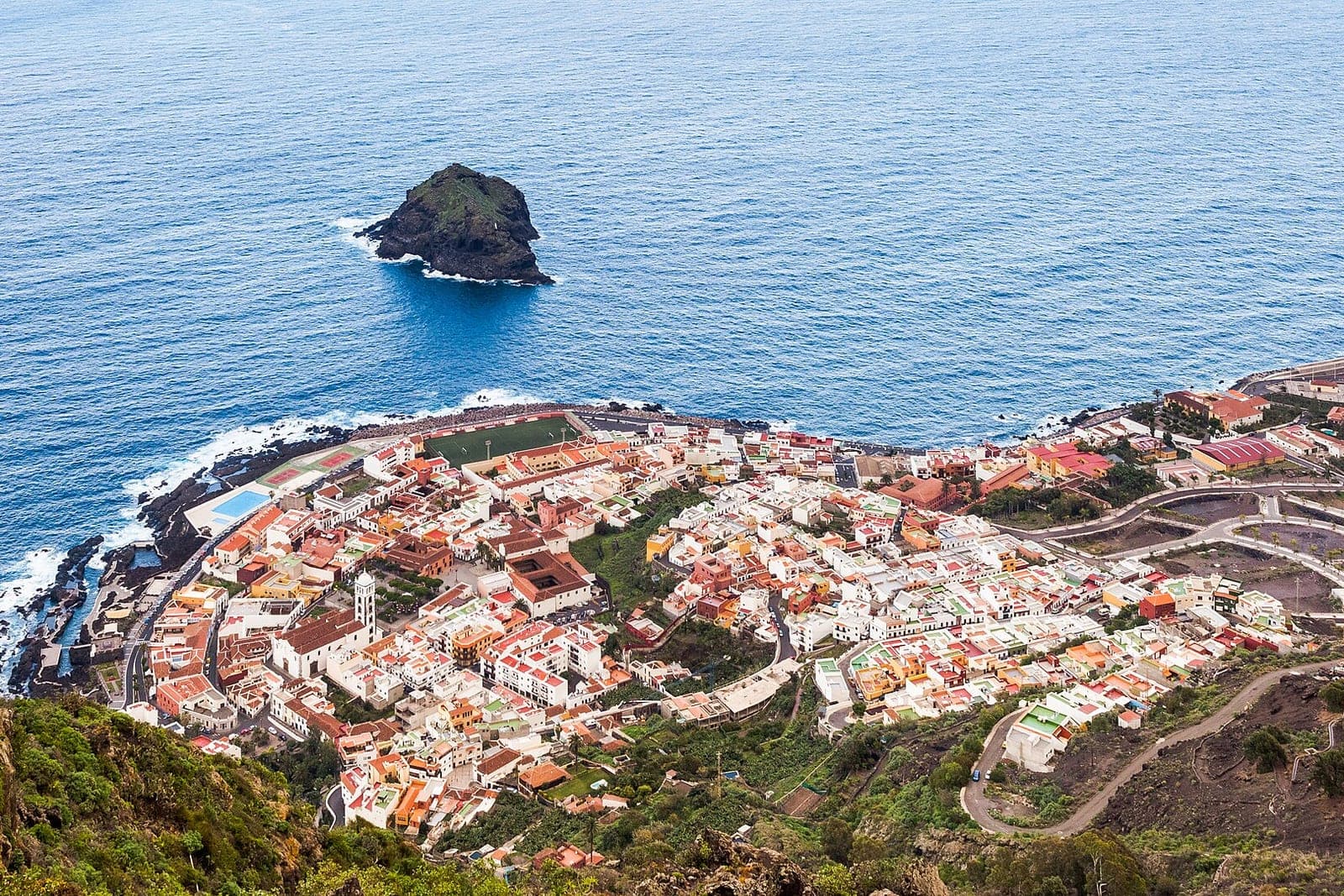
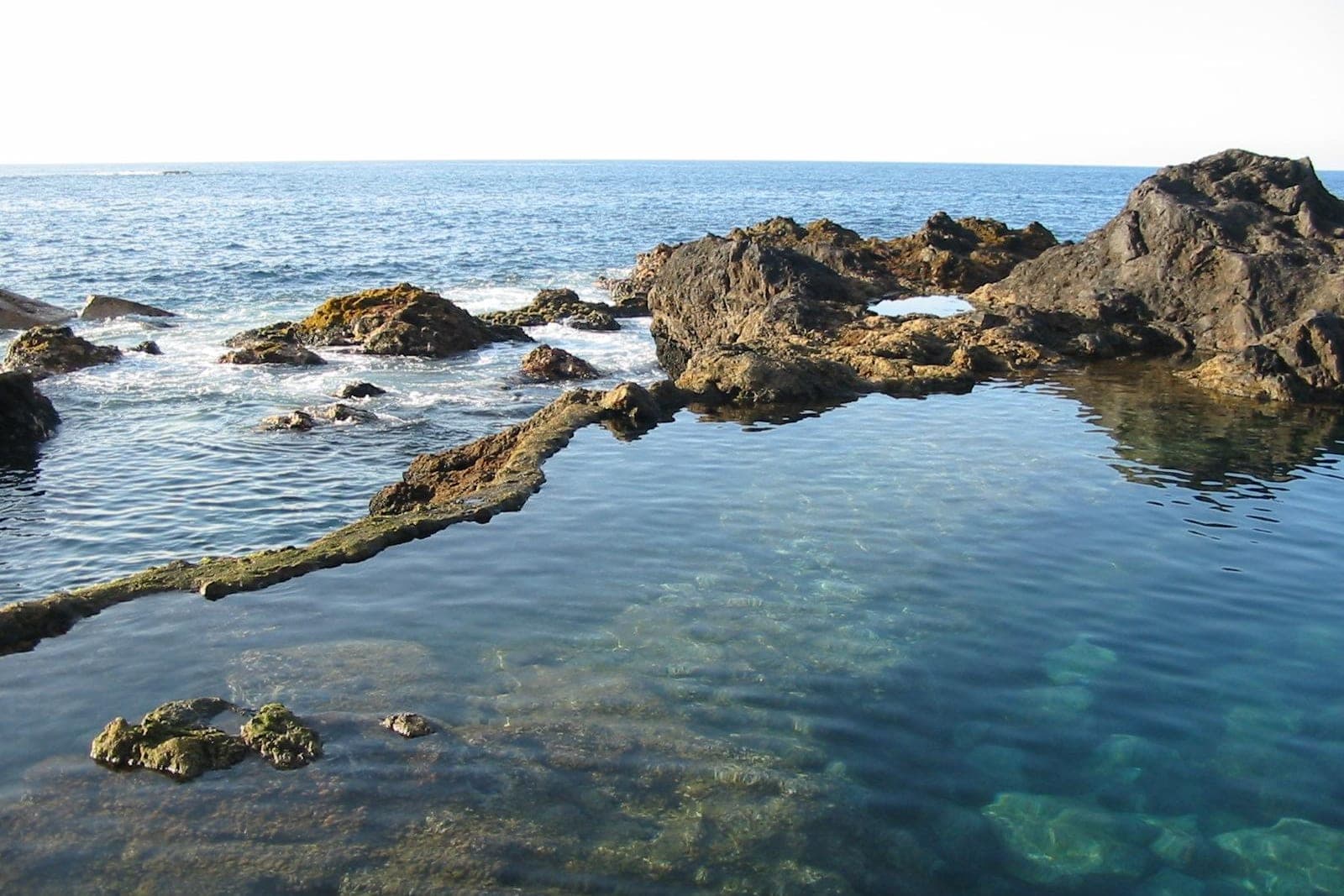
With the port sealed off, maritime trade shifted permanently to nearby Puerto de la Cruz, which inherited the island's commercial leadership. Garachico, by contrast, had to reinvent itself: its people rebuilt the town on the solidified lava itself and learned to live with the new volcanic shoreline. Where there had once been quays and moorings, the petrified pools and flows now form the famous natural pools of El Caletón, one of the area's great attractions.
Despite the catastrophe, much of its heritage survived. The grid of cobbled streets, the mansions with Canary-pine balconies, the churches and convents and the imposing Castle of San Miguel preserve the atmosphere of that seigneurial town of the 16th and 17th centuries. For this reason Garachico is listed as a Historic-Artistic Site and is regarded as one of the most beautiful villages in Spain, a place where the memory of the volcano and of the former port splendour can be felt in every corner.
Points of interest
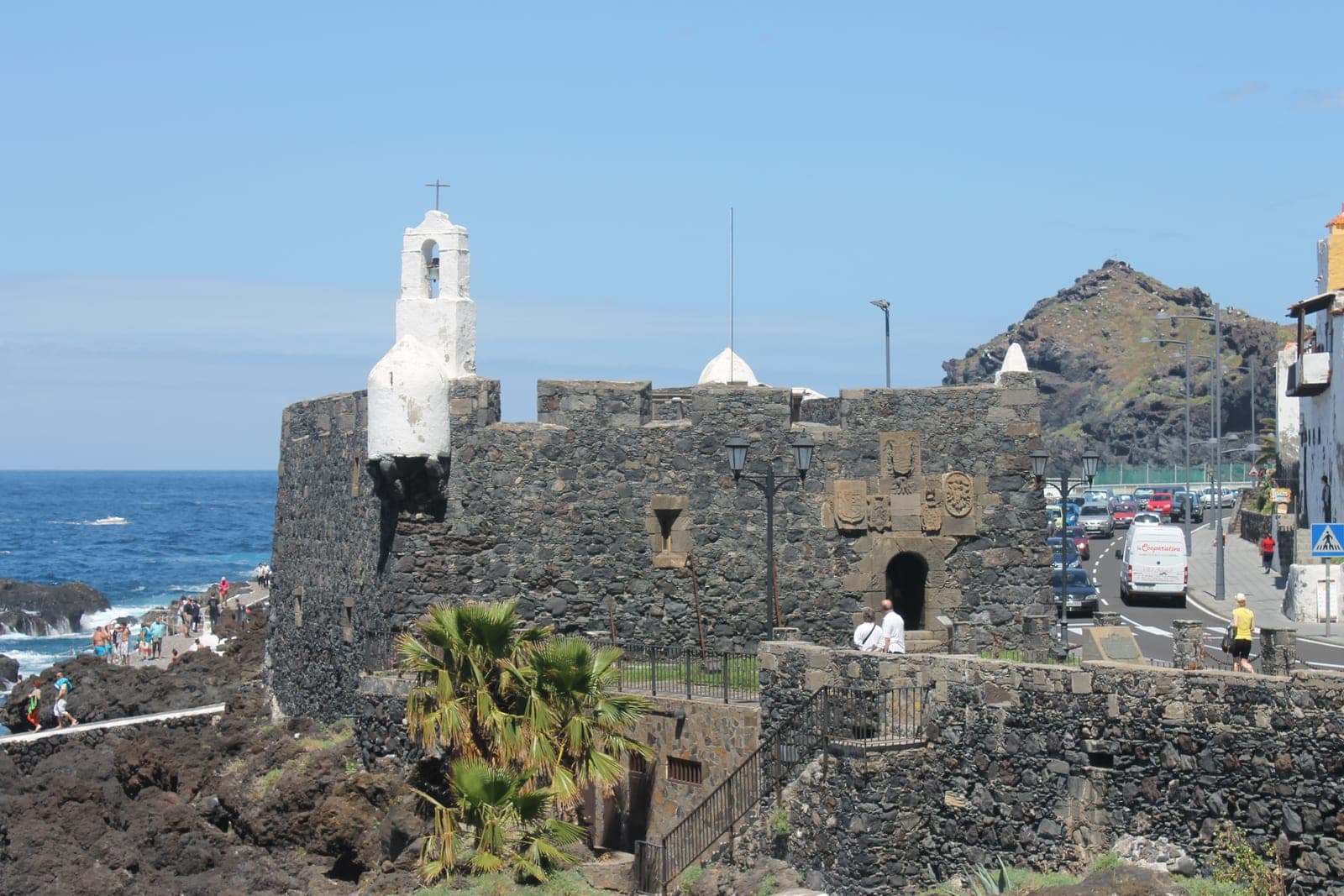
Castillo de San Miguel
A small Renaissance fortress built between 1575 and 1577 to protect Garachico's prosperous harbour from the raids of corsairs and pirates that plagued the Atlantic. Robust and compact, with walls of black masonry and a single tower, it guarded the entrance to the roadstead when the town was the commercial capital and main port of Tenerife. The 1706 eruption buried the harbour and the castle lost its defensive role, yet it survived the lava flows intact. Today it is one of the town's emblems, listed as a Cultural Interest Asset with monument status (1985), and houses a heritage interpretation centre.
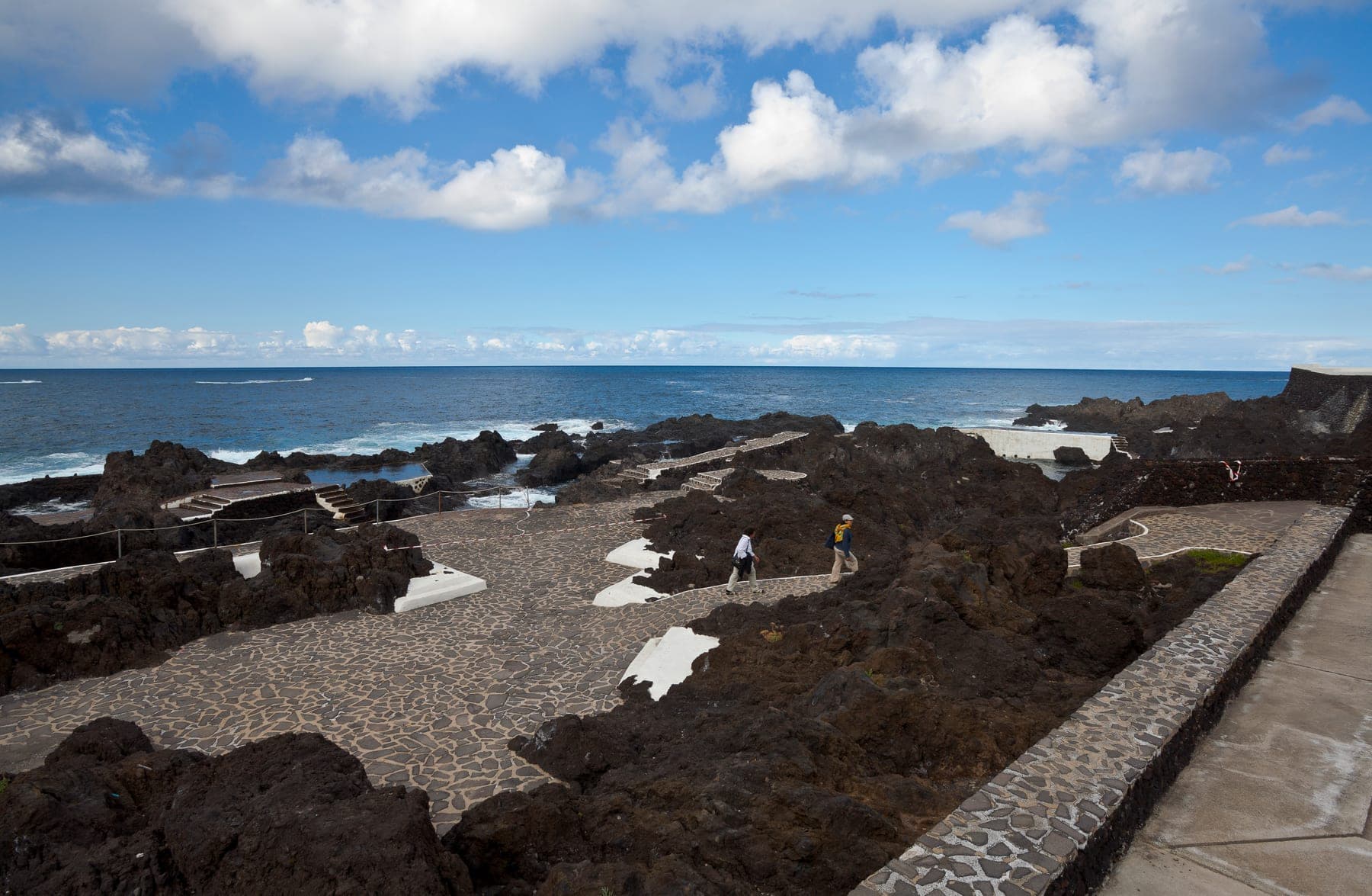
Piscinas naturales de El Caletón
A cluster of natural rock pools formed by the lava flows of the 1706 eruption, which solidified on reaching the sea to create a coastline of black volcanic rock. Where the old port once had quays and moorings, there now stretches this maze of pools of clear water, renewed by the swell, one of the most visited and photographed spots in Garachico. In the warm months its waters invite swimming and snorkelling among rock formations that serve as natural steps. El Caletón is the finest example of how the town reinvented itself upon the very lava that destroyed it.
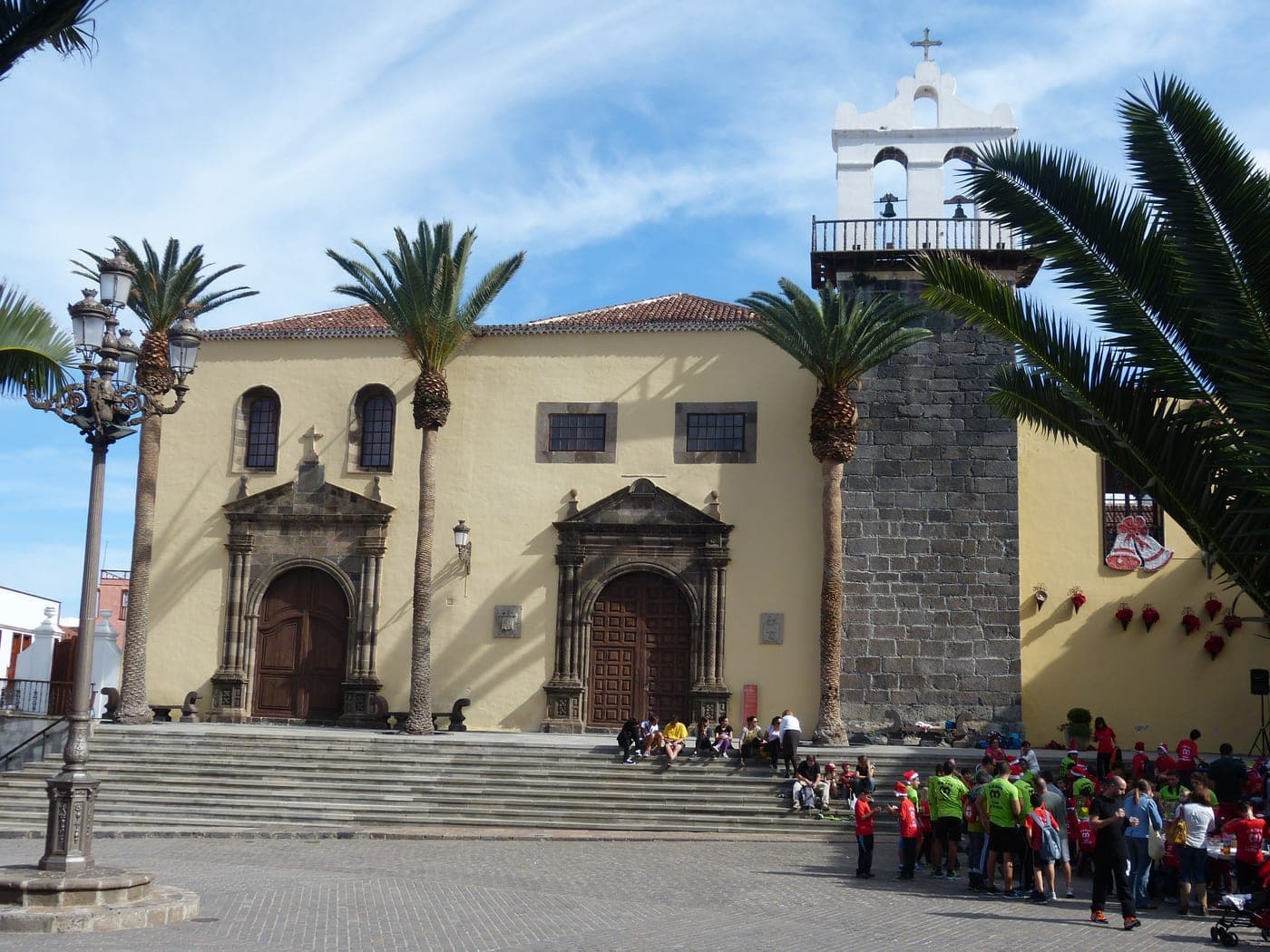
Convento de San Francisco
A former Franciscan convent whose origins go back to the 16th century, built next to the hermitage of Nuestra Señora de los Ángeles during the town's most splendid times. It was one of several religious houses that reflected the wealth of port-era Garachico. The complex, damaged by the 1706 eruption and later rebuilt, preserves a beautiful cloister around a garden courtyard. After the 19th-century disentailments it ceased to have religious use and is today municipally owned: it houses the public library, exhibition halls and a venue for cultural events, making it one of the leading heritage landmarks of the historic quarter.
Iglesia de Santa Ana
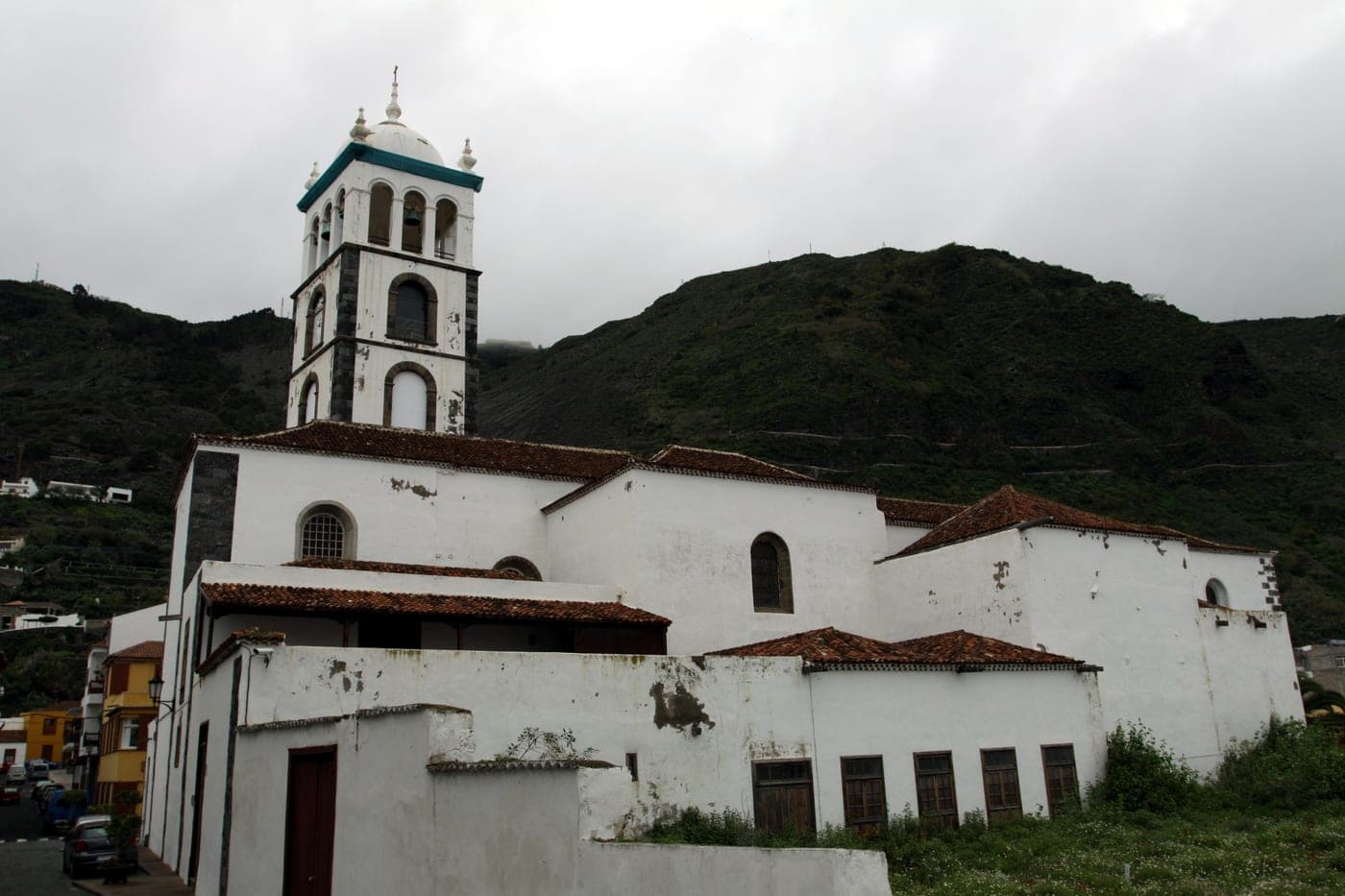
The parish church dedicated to Saint Anne, patron of Garachico, notable for its bearing and for the slender tower that rises above the urban ensemble. Its origins are linked to the town's golden age, although it suffered serious damage in the 1706 eruption and was later rebuilt. Inside it holds a valuable heritage of religious imagery and altarpieces, and preserves the town's devotional memory. Its silhouette and bell tower are among the most recognisable images of the historic quarter, and the church remains the centre of the patronal festivities that honour Saint Anne every 26 July.
Puerta de Tierra
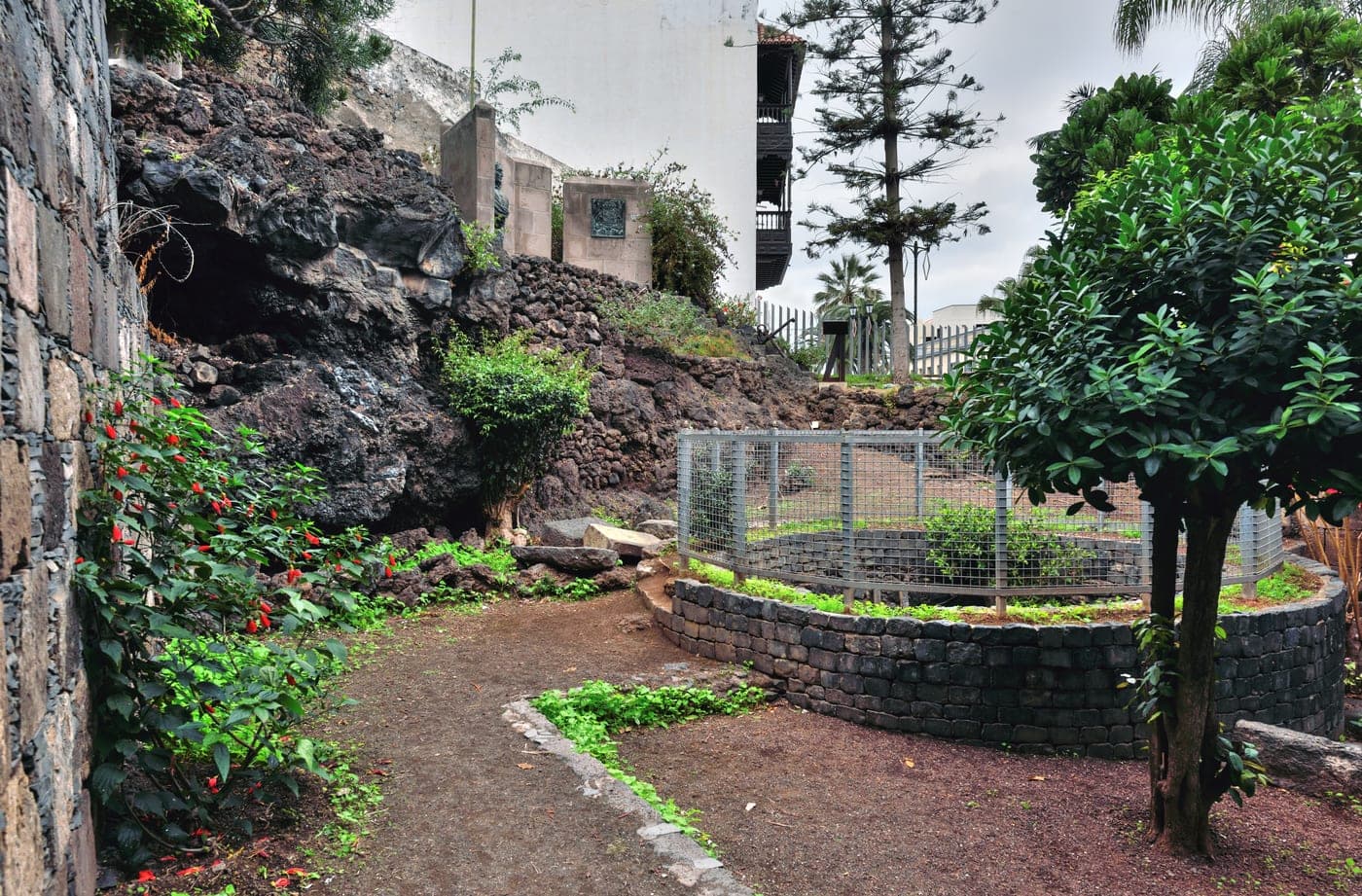
The old harbour gate, located near the Castle of San Miguel and beside the square popularly known as plaza de Abajo. It was the point through which goods passed in and out as they were loaded and unloaded at Garachico's old port during its commercial splendour of the 16th and 17th centuries. After the 1706 eruption buried the roadstead, the gate remained as a solitary, symbolic witness to that vanished port activity. Today it is preserved within a small garden, turned into one of the most evocative corners of the old town for recalling the seafaring, merchant past of the town.
Roque de Garachico
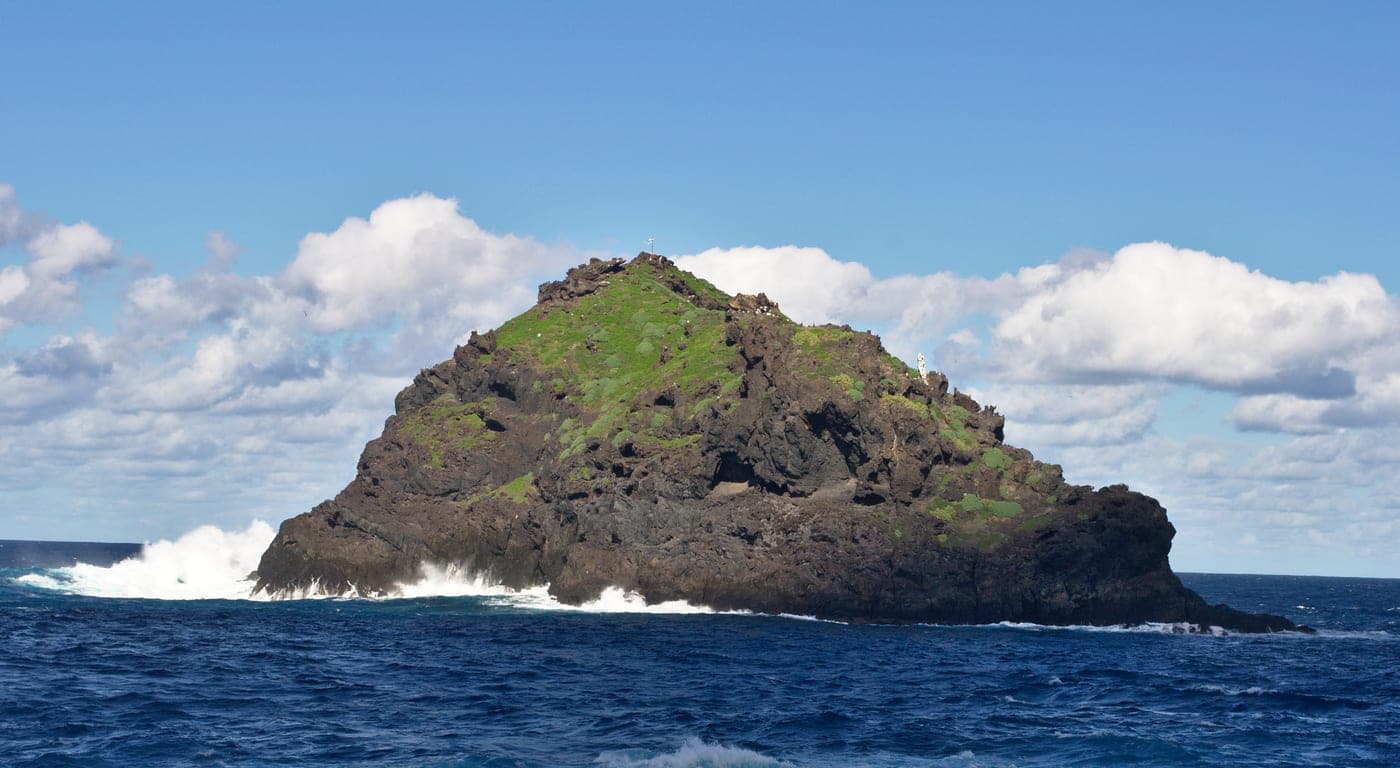
A rocky islet of volcanic origin lying off the town's coast, to which the municipality owes part of its name (from the Guanche root «igara»). This mass of rock emerging from the sea is one of Garachico's scenic icons and a visual landmark seen from the historic quarter and its viewpoints. Its seabed, rich in marine life and with crystal-clear waters, has made it a much-prized spot for diving and snorkelling, and it forms part of the area's protected natural spaces. To gaze upon the rock outlined against the Atlantic, with the tower of Santa Ana in the foreground, is one of the most characteristic images of the place.
Map of Garachico
Things to do in Garachico
Where to eat in Garachico
What to see in Garachico
Official data
Published by the Cabildo de Tenerife and reused here unmodified.
Waymarked trails9
- BC-1Ruta Forestal del Norte84.8 km+4600 mBike and horselinear
- PR-TF 43Garachico - Chinyero18.7 km+1810 mOn footlinear
- VM-19Pista Fuente Santa14.4 km+457 mMotor vehicles
- VM-20Pista de Arenas Negras y Pista de Montaña Cascajo14.2 km+812 mMotor vehicles
- BC-1.12Arenas Negras8.3 km+124 mBike and horsebranch
- PR-TF 43.5Circular Área Recreativa Arenas Negras5.9 km+248 mOn footcircular
and 3 more
Recreation areas and viewpoints4
- Arenas NegrasCar park
- Arenas NegrasRecreation area
- Arenas NegrasCampsite
- Arenas NegrasCaravan area
Tourist office
- GarachicoTemporarily closedAvda. República de Venezuela s/n (Explanada del antiguo muelleCerrada temporalmente (hasta probablemente después de verano).922133461
Listed heritage sites7
- ANTIGUO CONVENTO FRANCISCANO DE Nª SRA. DE LOS ÁNGELESMonumentOfficial gazette
- CASTILLO DE SAN MIGUELMonumentOfficial gazette
- HACIENDA DE LA QUINTA ROJAMonumentOfficial gazette
- HACIENDA EL LAMEROMonumentOfficial gazette
- IGLESIA DE SANTA ANAMonumentOfficial gazette
- MONASTERIO DE LA INMACULADA CONCEPCIÓNMonumentOfficial gazette
and 1 more
Source: Cabildo Insular de Tenerife · CC BY · data from 2026-08-01 · How we use open data
Folklore & traditions
Garachico's festive calendar revolves around its patron saints, Saint Anne and Saint Roch, who share the patronage of the Villa y Puerto. Saint Anne's feast is celebrated on 26 July with a Eucharist and procession, while Saint Roch has his great day on 16 August, with Mass in his hermitage and a crowded pilgrimage in which ox-carts and pilgrims dressed as «magos» fill the streets to the sound of timples, drums and tajarastes, handing out wine and local produce. For almost a month, between late July and August, the town strings together a long programme of religious and popular events: the opening address, the Festival of Traditions, the magos' dance, open-air dances and the lively performances of Canary folk groups with their «ajijides» and coloured ribbons.
The town's greatest event, however, is the Lustral Festivities of the Most Holy Christ of Mercy, held every five years —in years ending in 0 and 5— to recall the eruption of the Trevejo volcano in 1706. For the occasion, the historic quarter is adorned with five squares and five floats decorated with hundreds of thousands of flowers hand-made from paper by the townspeople. The most spectacular moment is the pyrotechnic re-enactment of the eruption, the famous Fuegos del Risco (Cliff Fires), in which the slopes overlooking the town blaze with light and sound to relive that night when the lava poured down towards the sea, in a moving dialogue between the memory of the disaster and devotion to the Christ.
Garachico's identity is rounded off by its popular culture and its cuisine. Traditions of Canary roots —string music, the magos' dances and the typical costume— coexist with a cuisine of sea and uplands in which fresh local fish, papas arrugadas with mojo, regional cheeses and the area's wine stand out, the latter heir to the malvasía that brought the town fame and wealth. To eat beside the pools of El Caletón or in the squares of the old town is also a way of savouring the history of this village born of trade and reinvented upon the lava.
Photos: Diego Delso (CC BY-SA 4.0) · El fosilmaníaco (CC BY-SA 3.0) · Diego Delso (CC BY-SA 3.0) · Wolfgang Sauber (CC BY-SA 3.0) · Chmee2 (CC BY-SA 3.0) · Cayambe (CC BY-SA 4.0) · Paweł Szubert (CC BY-SA 3.0) · Wikimedia Commons