La Guancha
Northern farming uplands, a viewpoint towards Teide and young wines.
History
La Guancha sits in the mid-altitude farmlands of northern Tenerife, on the slope that descends from the Corona Forestal pine belt down to the coast, between the municipalities of San Juan de la Rambla, Icod de los Vinos and the Orotava valley. Before the Castilian conquest, this territory belonged to the menceyato of Icod, one of the nine aboriginal kingdoms into which the island was divided, known to the Guanches as Chinet or Achinech. The ancient Canarians used these mid-altitude lands, rich in ravine water and springs, for herding and farming, leaving behind a place-name heritage and a cultural substrate that still endure in the area.
The municipality's name springs from a moving legend tied to the conquest. According to the tradition recorded by the Town Council itself, during the raids of Alonso Fernández de Lugo's troops, the soldiers came upon a young aboriginal woman filling a clay jug at a spring. Pursued in order to be captured, the Guanche woman chose to throw herself into a ravine rather than surrender, and from then on the place was christened the "Fuente de la Guancha" (Fountain of the Guanche Woman). From that spring and that woman the town, and by extension the whole municipality, takes its name.
With the conquest concluded in 1496, the lands were distributed and the slow formation of the first settlements began. Around the start of the 16th century a hermitage dedicated to Saint Catherine the Martyr was raised on the coastal strip, giving its name to the seaside district. Settlement gradually took shape in scattered hamlets across the mid-slopes, linked to farming and water. Religious and community life consolidated when, in 1579, a new hermitage consecrated to the Sweet Name of Jesus was erected around the Fuente de la Guancha. Its importance grew until, on 20 June 1630, the Bishop of the Canaries Cristóbal de la Cámara y Murga raised it to parish rank, making it the spiritual heart of the place.
La Guancha's economy has always been marked by mid-altitude agriculture, sustained by small landowners who work their plots on a family basis. Rain-fed potatoes are the most deeply rooted crop in the higher zones, accompanied by fruit trees, vegetables and, very especially, the vine. The municipality is the seat of the Regulatory Council of the Ycoden-Daute-Isora Denomination of Origin, created in 1994, which certifies the wines of this north-western district of the island. On volcanic soils and under the influence of the trade winds, vines of listán blanco, listán negro, negramoll and other traditional grape varieties produce wines that have made the area famous since ancient times, heirs to those Canary malvasías once exported across half of Europe.
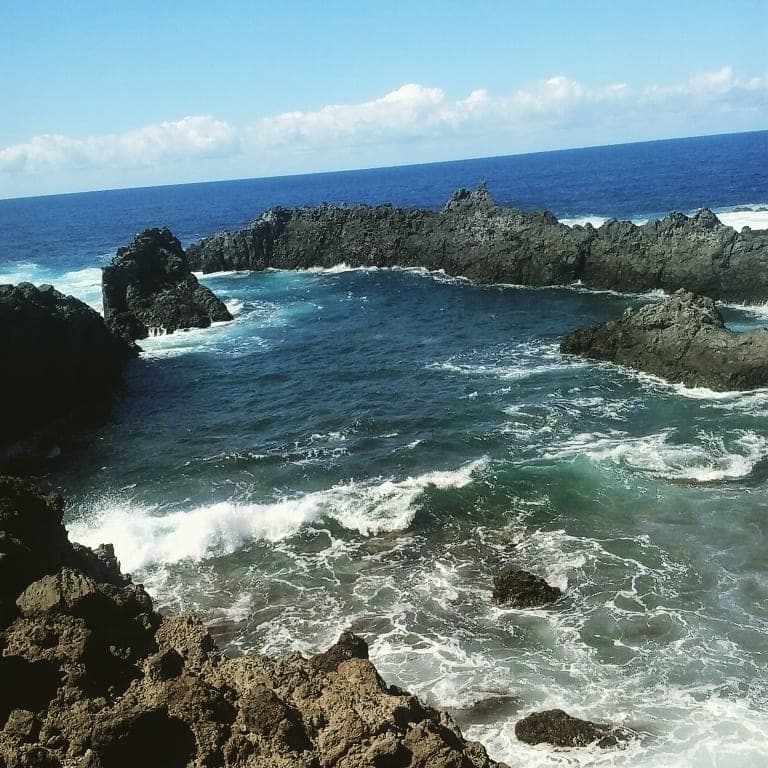
Above the croplands stretches the municipality's great natural heritage: the Canary pine forest of the Corona Forestal, which crowns the mid-slopes and descends to surprisingly low altitudes, connecting with Teide National Park on the summits. In the opposite direction, towards the sea, the coast holds the Charco del Viento, a set of natural pools sheltered by lava flows in the Santa Catalina district, one of the most cherished coastal spots in northern Tenerife. Between the pine forest and the coast, recreational areas such as the Barranco de la Arena allow visitors to enjoy the highlands and the tradition of eating outdoors.
Today La Guancha is a municipality of almost 5,600 inhabitants that has managed to preserve its rural, agricultural character while opening up to visitors. Its rich festive life, led by the Bajada de las Hayas in August and by the famous municipal Nativity scene that draws thousands of people each Christmas, keeps alive an identity forged among ravines, vineyards and pine forests. Its economy now combines farming, services and a growing inland and nature tourism, drawn by its trails, its cuisine and its authenticity as a town of the northern mid-altitude lands.
Points of interest
Iglesia del Dulce Nombre de Jesús
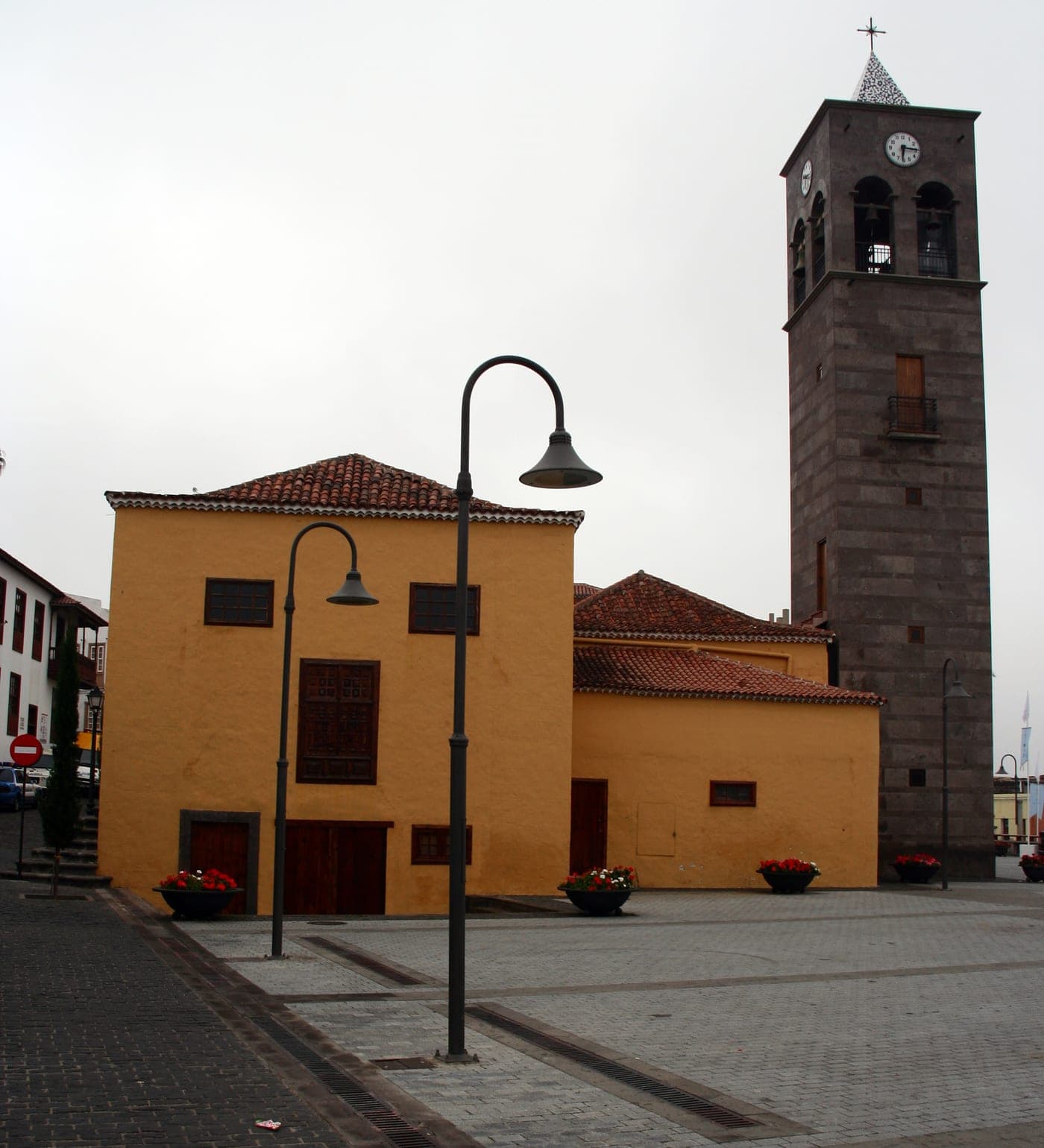
Parish church and spiritual heart of La Guancha. Its origins date back to 1579, when a hermitage dedicated to the Sweet Name of Jesus was raised around the Fuente de la Guancha. On 20 June 1630, the Bishop of the Canaries Cristóbal de la Cámara y Murga elevated it to parish rank. The building blends traditional Canarian architecture: a carved-wood bell tower and doorways, naves separated by white arches, and coffered ceilings of fine dark wood. Inside, gilded Baroque altarpieces gleam, presided over by the main altar.
Bodegas de la D.O. Ycoden-Daute-Isora
La Guancha is the seat of the Regulatory Council of the Ycoden-Daute-Isora Denomination of Origin, created in 1994, which certifies the wines of north-western Tenerife. Its production area stretches from sea level up to 1,400 metres on the slopes of Teide, on volcanic soils and under the humidity of the trade winds. The district's wineries craft wines from traditional varieties such as listán blanco, listán negro, negramoll and malvasía, heirs to a culture that made Canary wines famous across Europe. Several offer tastings and wine tourism among the mid-altitude vineyards.
Charco del Viento
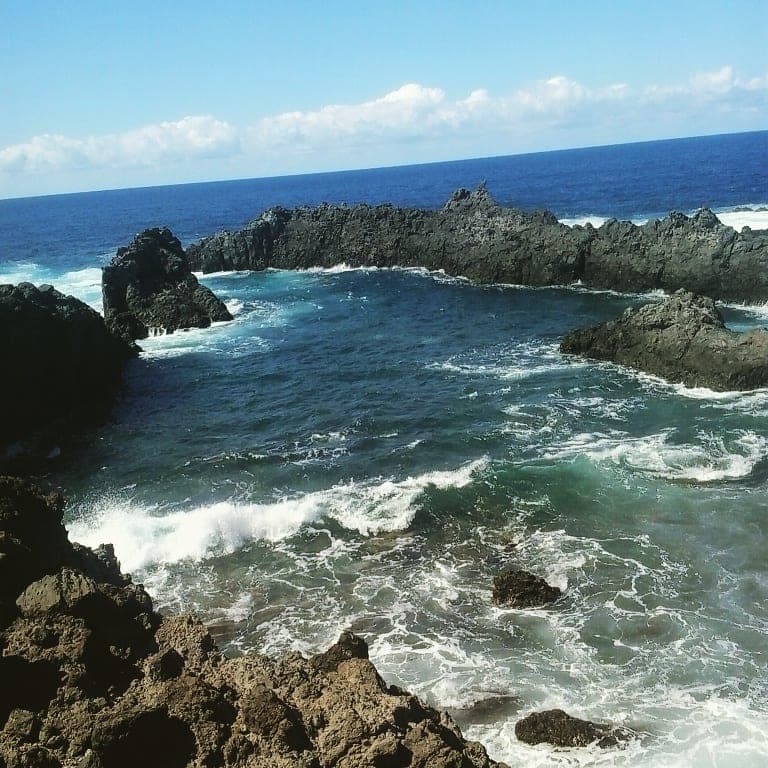
One of the most spectacular coastal spots in northern Tenerife, in the Santa Catalina district on La Guancha's shoreline. It is a set of natural pools formed among volcanic rocks, sheltered by two lava breakwaters that protect the small bay from the rough seas of the northern Atlantic. Its crystal-clear waters and safe swimming areas make it ideal for the whole family. It is easily reached via the TF-351 road, with parking and steps leading down to the water. The setting, shaped by volcanic activity, offers memorable sunsets over the ocean.
Área Recreativa Barranco de la Arena
A leisure area set deep in nature, in the upper mid-slopes of La Guancha, within the pine forest of the Corona Forestal. It is a much-loved spot for locals and visitors to enjoy the highlands, go hiking and keep alive the Canarian tradition of eating outdoors among the pines. It has picnic tables, barbecue spots and the shade of Canary pines, and serves as a starting point for trails climbing towards the summits and Teide National Park. The pure air and scent of pine make this enclave a perfect destination for a family day out.
Pinar de La Guancha (Corona Forestal)
The Canary pine is the municipality's most characteristic forest landscape. La Guancha's pine forest forms part of the Corona Forestal Nature Park, the largest protected area in the Canaries, which encircles Teide National Park like a great green belt. Here the pine forest crowns the mid-slopes above 1,000 metres, though it descends as low as 400 metres, a phenomenon unique on the island. The Canary pine, an endemic species highly resistant to fire and drought, captures the moisture of the trade winds and feeds the aquifers. It is a land of trails and biodiversity linking the mid-slopes with the high mountain.
Ermita de Santa Catalina
A small temple in the coastal district of Santa Catalina, on La Guancha's shoreline. Its origins go back to the early years after the conquest, when around the start of the 16th century a hermitage dedicated to Saint Catherine the Martyr was raised on this stretch of coast, eventually giving its name to the district. The present building, simple and of traditional Canarian lines, was rebuilt in the 19th century. It is the focus of devotion for the seafaring and farming district of Santa Catalina and the setting for its local festivities, a testimony to the early Christian presence on the coast.
Map of La Guancha
Things to do in La Guancha
Where to eat in La Guancha
What to see in La Guancha
Official data
Published by the Cabildo de Tenerife and reused here unmodified.
Waymarked trails3
- BC-1Ruta Forestal del Norte84.8 km+4600 mBike and horselinear
- VM-17Pista del P.K. 29, Pista de las Vistas de Sánchez, Pista Barranco de la Arena y Pista El Lagar19 km+188 mMotor vehicles
- PNT-33Montaña Negra3.2 km+204 mOn footlinear
Recreation areas and viewpoints4
- Barranco de la ArenaNature classroom
- Barranco de la ArenaCamp
- Casa de La PraderaRest area
- Caseta de PiedraRest area
Source: Cabildo Insular de Tenerife · CC BY · data from 2026-08-01 · How we use open data
Folklore & traditions
La Guancha's festive calendar revolves around its mid-altitude farmland and its religious devotion. The patron-saint festivities are held in August and have as their most distinctive event the Bajada de las Hayas: residents and pilgrims bring down branches of beech from the highlands to adorn and perfume the town's streets, a tradition that binds the community to its forest surroundings. The feast of the Virgen de la Esperanza, the municipality's patroness, is commemorated on 18 January, and Shrove Tuesday during Carnival is also a local holiday.
La Guancha's cuisine reflects its character as a mid-altitude town. The rain-fed potatoes of the higher zones take centre stage at the table, with mojos, pork and goat meats, stews and cheese, paired with the wines of the Ycoden-Daute-Isora D.O. The Farmers' Market offers a chance to discover the area's fresh produce and the craftsmanship of its small producers.
Photos: Al3x dybala21 (CC BY-SA 4.0) · Francisco Javier Toledo Ravelo (CC BY-SA 2.0) · Al3x dybala21 (CC BY-SA 4.0) · Wikimedia Commons