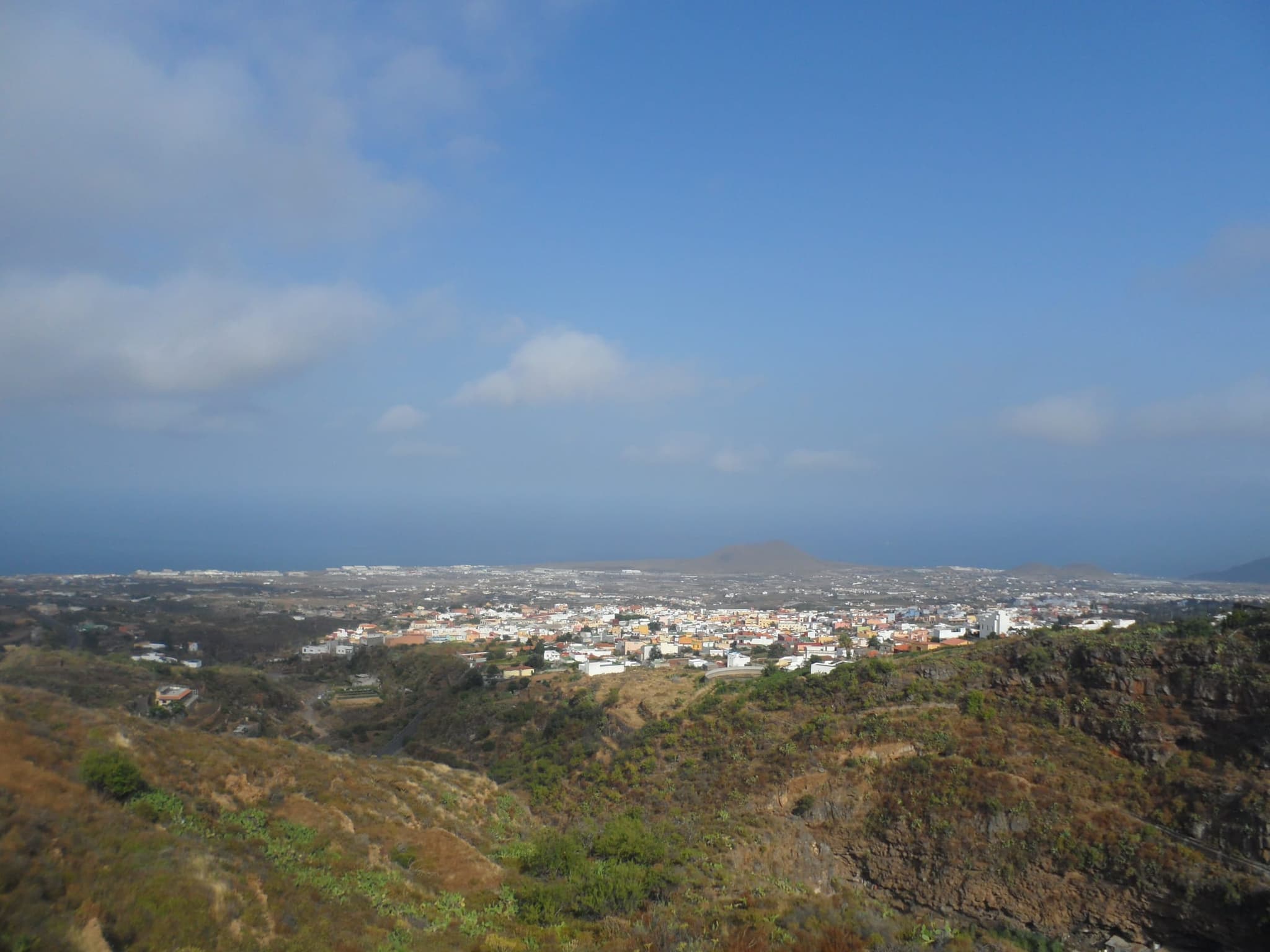
Arafo
A village of music and brass bands, among vineyards and the Güímar valley.
History
Before the Castilian conquest, the territory now occupied by Arafo formed part of the menceyato of Güímar, one of the nine Guanche kingdoms into which Tenerife was divided. The aboriginal inhabitants used the springs of the Añavingo ravine and the slopes of the valley for grazing and gathering. After the island was incorporated into the Crown of Castile in 1496, the Adelantado Alonso Fernández de Lugo distributed land and water among the conquerors: grants were made in the area as early as 1503 and 1504, and in 1509 Gonzalo de Mejías transferred water and land to the Augustinian convent of the Holy Spirit in La Laguna, which channelled the waters of Añavingo and became the chief landowner of the area.
During the 16th century new settlers established themselves around hamlets such as El Aserradero and Perdomo, and the Augustinians introduced devotion to Saint Augustine. Lacking their own parish, the inhabitants travelled to Candelaria to fulfil their religious duties. Agricultural prosperity allowed a hermitage to be built between 1672 and 1690, dedicated to San Juan Degollado (the Beheading of Saint John the Baptist). At the start of the 18th century the village grew and gained a sense of its own identity: in 1738 the process to establish its own parish began.
One event marked Arafo's landscape forever: the eruption of the Las Arenas volcano, between 2 February and 27 March 1705. Its badlands forced the settlement to move northward, around the new church, which became the most populous nucleus. On 17 October 1795 Bishop Antonio Tavira decreed the creation of the parish of San Juan Degollado, independent of Candelaria. Once parish segregation was achieved, the inhabitants gained the right to elect their own officials: on 1 January 1798 Felipe Marrero became the first local mayor, and with the Constitution of Cádiz of 1812 Arafo was established as an independent municipality.
The 19th century was shaped by economic crises and an agrarian structure burdened with feudal dues; with the disentailment, the land passed into the hands of a few families, such as the Batista. After a peak of 1,849 inhabitants in 1877, emigration to the Americas and the cochineal crisis reduced the population, which rebounded at the end of the century thanks to the export of potatoes and tomatoes and improved communications.
Throughout the 20th century, Arafo took great care of its urban layout, which earned it several beautification awards and, in 1981, the Second National Tourism Prize for the Beautification and Improvement of Spanish Towns. As a culmination, the Government of the Canary Islands granted it the title of Villa (Town) in 1983. Social and cultural life revolved around its recreational clubs, led by the Casino Unión y Progreso, founded in February 1906. In 1994 major works were inaugurated, such as the Juan Carlos I Auditorium, the Conservatory and the rehearsal halls, solemnly opened by the King and Queen of Spain on 24 June 1994.
But if Arafo is known for anything throughout the Canaries it is for its powerful musical tradition, an almost unique case of a town with two rival centenarian bands. The story begins in 1860 with a children's band which, renewed at the start of the 20th century, became the Sociedad Filarmónica Nivaria; from it, in 1925, the Agrupación Artístico-Musical La Candelaria split off, debuting in Candelaria on 2 February 1926. Both, together with choirs such as the María Auxiliadora (1946), keep alive a musical identity that culminates each August in the Band Competition. Added to this hallmark are the flower-and-heather carpets of Corpus Christi, the agriculture of the midlands and the wines protected by the Valle de Güímar Designation of Origin.
Today Arafo is a municipality of just under 6,000 inhabitants that combines its neat, flower-filled historic centre, quality agriculture, an industrial estate on the coast and an extraordinary range of nature, with the Añavingo ravine and the trails that climb up to the Corona Forestal and the summit ridge, on the edge of Teide National Park.
Points of interest
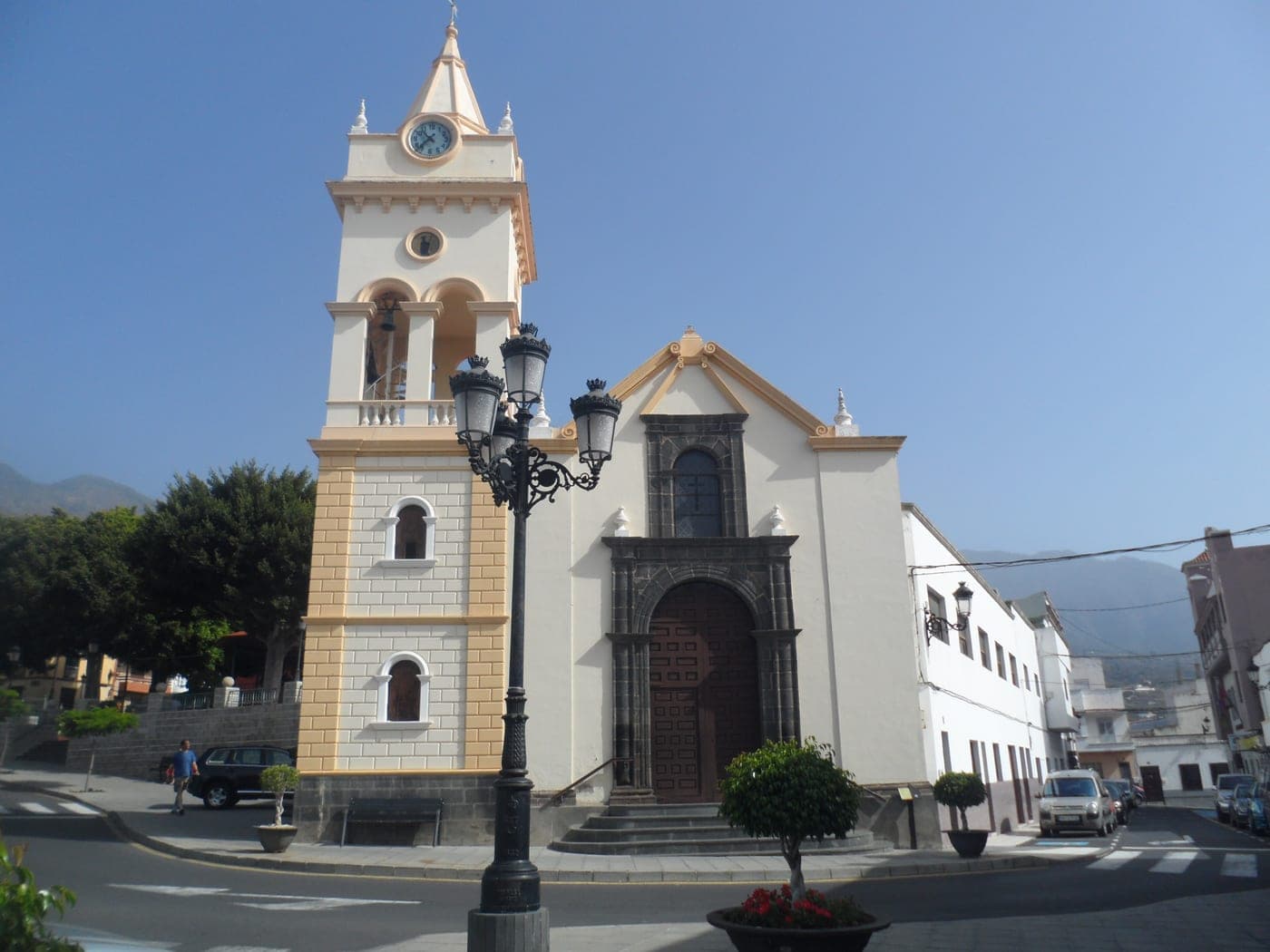
Iglesia de San Juan Degollado
The main church of Arafo and the heart of its historic centre. Its origins go back to a hermitage built between 1672 and 1690, enlarged until it became an independent parish on 17 October 1795. It is dedicated to San Juan Degollado, that is, the Beheading of Saint John the Baptist, a dedication that distinguished it from the church of San Juan in Güímar. Inside, the carving of María Auxiliadora is venerated, an image canonically crowned and named Honorary and Perpetual Mayoress of the Town, along with altarpieces dedicated to the Souls, Saint Joseph, Our Lady of Sorrows and the Immaculate Conception, and carvings of Saint John, Saint Bernard and Saint Augustine. The church, of traditional Canarian layout, presides over a landscaped square that hosts the main festivities and the Corpus Christi carpets.
Auditorio Juan Carlos I
Solemnly inaugurated by the King and Queen of Spain on 24 June 1994, the Juan Carlos I Auditorium is Arafo's great performance venue and a symbol of its musical calling. Beside it stand the Conservatory and the rehearsal halls, which support the town's bands, choirs and music schools. Throughout the year it hosts concerts, band competitions, choral gatherings, school events and events of regional scope, establishing itself as a cultural landmark of the Valle de Güímar. Its construction was one of the town's major public works in the 1990s and reinforces Arafo's fame as a town of music, where musical training and the activity of its ensembles find a stage worthy of them.
Molino Harinero y Lavaderos
An ethnographic ensemble that recalls the traditional life of Arafo, tied to water and to the agriculture of the Valle de Güímar. The flour mill, driven by the force of water channelled from the springs of the Añavingo ravine, was used to grind the municipality's cereals, the basis of gofio and bread. A few steps away the public washhouses are preserved, where generations of women did the laundry and much of the town's social life was woven. Both elements form part of the local ethnographic heritage and help to understand how water, a scarce and contested resource on the island, structured the town's economy and community life for centuries, in a midland setting marked by ingenuity in making the most of every stream.
Casino Unión y Progreso
Founded in February 1906, the Casino Unión y Progreso is the oldest of Arafo's recreational clubs and one of the great pillars of its social and cultural life. For more than a century it has been a meeting point for the people of Arafo, a venue for gatherings, dances, theatrical evenings and celebrations, in a town with an intense associative tradition. Its existence reflects the cultural dynamism of a town that, besides music, cultivated amateur theatre from at least the late 19th century. Today it continues as an active cultural space, part of the historic centre, and it forms part of the identity of a municipality that has managed to preserve its traditional institutions and its lively community life.
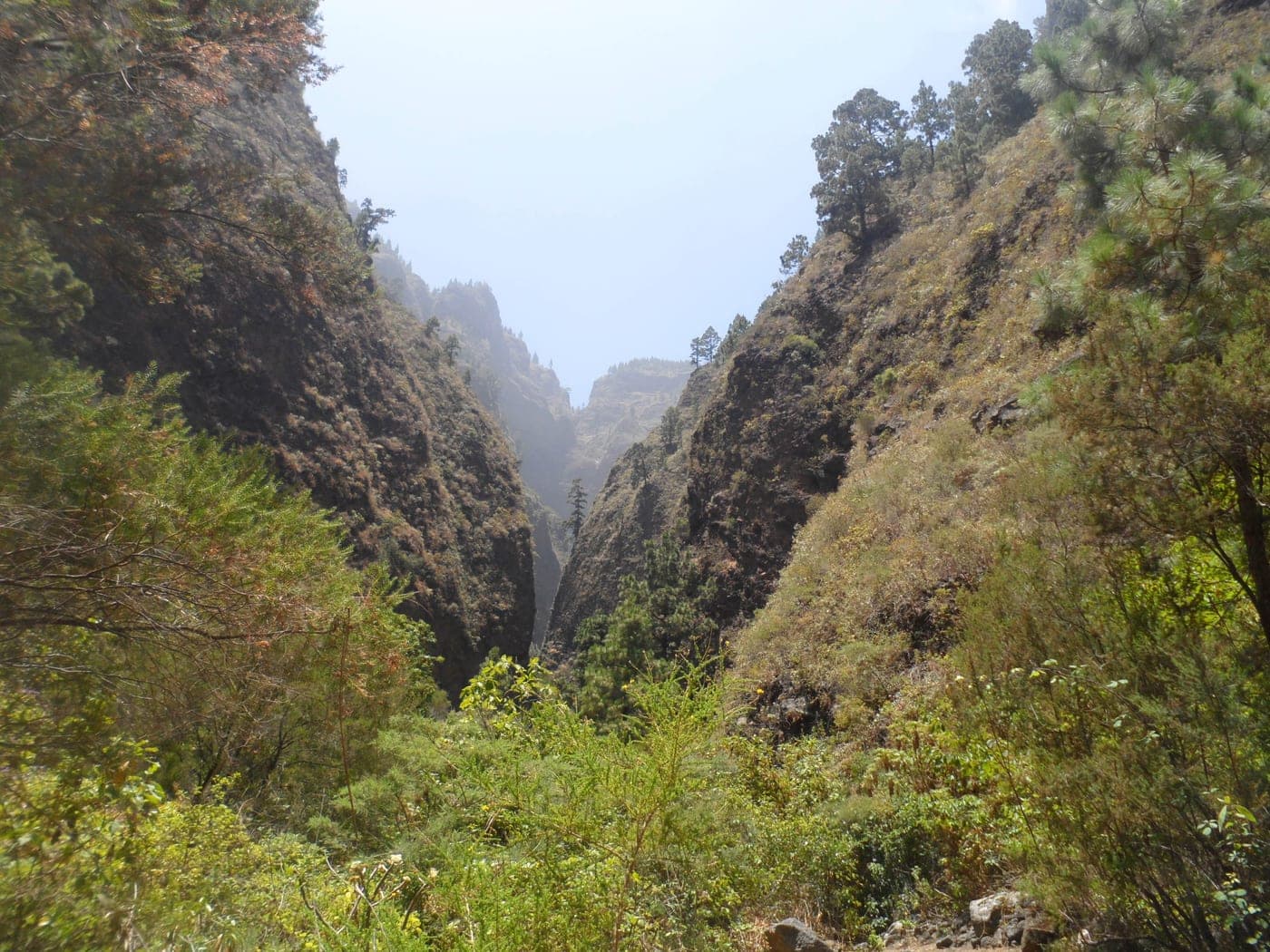
Barranco de Añavingo
This is Arafo's main watercourse and one of its most valuable natural spots. Its springs, already mentioned in the land distributions of 1504, have supplied water to this south-eastern part of Tenerife since time immemorial, through galleries and channels dug from the 16th century onward. The ravine preserves remarkable vegetation, with Canary pine, heather, rockrose and remnants of laurel forest, and a fauna of lizards, birds, bees and butterflies. Along its bed runs a much-loved trail that, in about 3 km, leads to the chapel of San Agustín, linked since 1751 to a rogation for water. The full route exceeds 8 km and lets you venture into a rugged landscape of great beauty, a testament to the town's historic struggle for water.
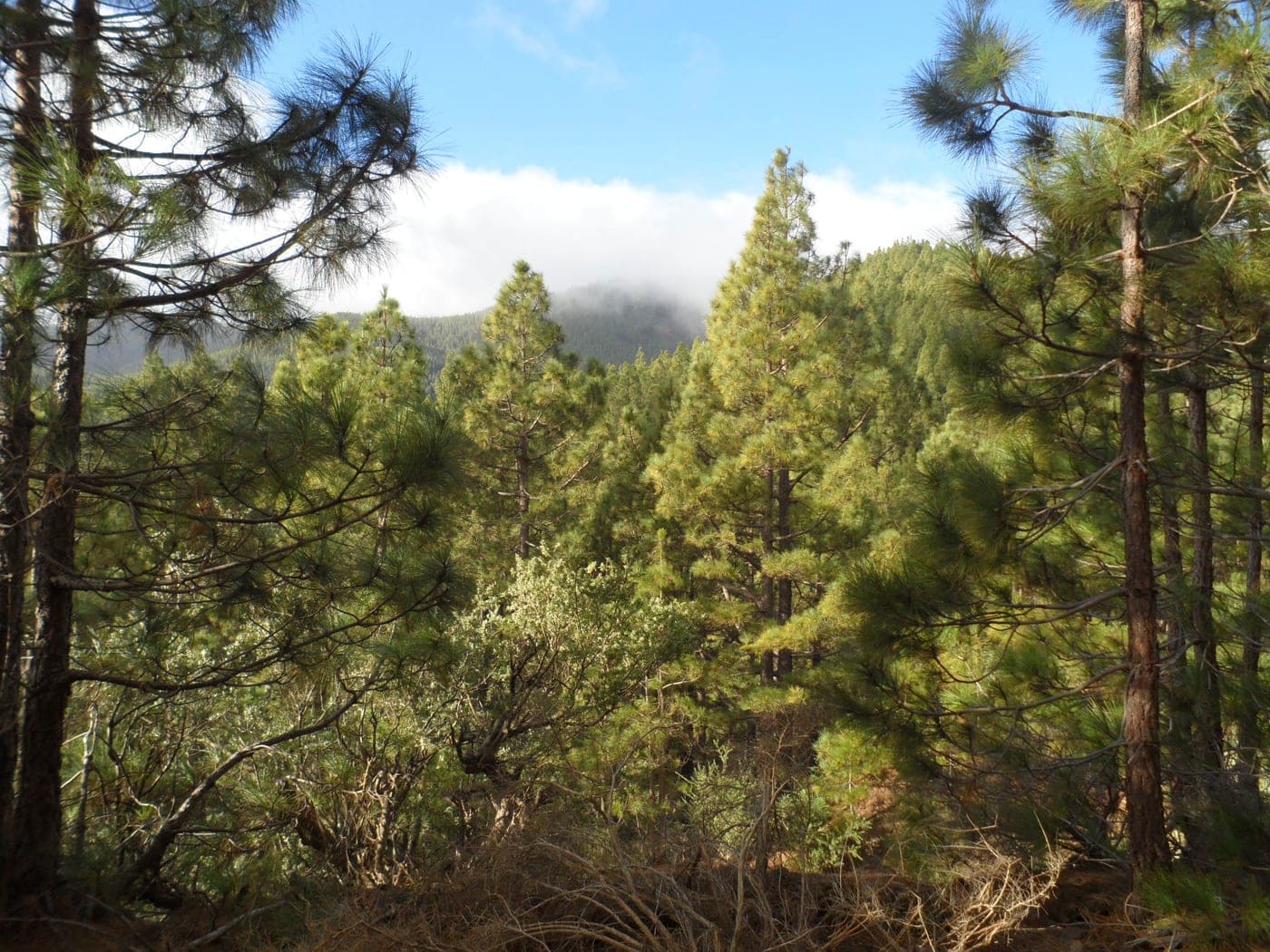
Corona Forestal y senderos hacia la cumbre
Above the town of Arafo stretches the Corona Forestal Natural Park, the largest protected area in the Canary Islands, which surrounds Teide National Park. From the municipality, roads and trails climb up the ridge to the summit, crossing a magnificent Canary pine forest that gives way, at high altitude, to the badlands and panoramic views of Teide. It is an ideal territory for hiking and cycle touring, with routes that connect the agricultural midlands and the former communal woodlands reforested in the mid-20th century. The contrast between the coast, the flower-filled town centre, the Añavingo ravine and the high mountain makes Arafo a natural gateway to the heart of Tenerife and the Teide area.
Things to do in Arafo
Where to eat in Arafo
What to see in Arafo
Official data
Published by the Cabildo de Tenerife and reused here unmodified.
Waymarked trails3
- Camino a Candelaria (Tramo La Crucita - Arafo)7.2 km+23 mOn footlinear
- PR-TF 35.4Camino a Candelaria (Tramo Aguamansa - La Crucita)4.5 km+983 mOn footlinear
- PNT-17Igueque2.7 km+72 mOn footlinear
Recreation areas and viewpoints4
- ChimagueViewpoint
- ChimagueViewpoint
- Los FrailesCar park
- Los FrailesRecreation area
Listed heritage sites3
- CASA DE LA ESQUINA DE LOS CARROSHistoric siteOfficial gazette
- LO DE RAMOSHistoric siteOfficial gazette
- MOLINO Y LAVADEROS DE ARAFOEthnological siteOfficial gazette
Source: Cabildo Insular de Tenerife · CC BY · data from 2026-08-01 · How we use open data
Folklore & traditions
Arafo's great hallmark is its musical tradition, to the point that it is known as the town of music. It is an almost unique case in the Canaries for having two centenarian bands that grew from the same root. The present-day Sociedad Filarmónica Nivaria traces its origins to a children's band of 1860 which, renewed and uniformed at the start of the 20th century, took that name. In 1925 a group of musicians split off to form the Agrupación Artístico-Musical La Candelaria, which made its debut in Candelaria on 2 February 1926. The good-natured rivalry between the two, popularly the upper band and the lower band, has fuelled the town's musical passion for a century. To them is added a notable choral tradition, led by the Coral María Auxiliadora (1946). Each August, the Music Band Competition and the Regional Couplet Gathering, around the patron festivities of San Juan Degollado and San Agustín, turn Arafo into a capital of Canarian popular music.
Another deeply rooted tradition is the Corpus Christi carpets, part of the Tenerife celebration of floral tapestries recognised by UNESCO. For the Corpus procession in June, the townspeople cover the streets of the old quarter with ephemeral carpets made of flower petals, dyed salt, seeds and, above all, chopped and toasted heather in different shades, forming religious and geometric designs over which the Blessed Sacrament passes. It is a collective and delicate art that fills the town with colour and scents for a few hours. Alongside Corpus, the festive calendar includes San José, the May Cross, the Virgen del Carmen in July, the Pilgrimage of San Agustín and the Three Kings parade, in which the music of the bands is never missing.
Arafo's culture is also that of wine and midland agriculture. The municipality forms part of the Valle de Güímar Designation of Origin, recognised in 1996, which protects high-altitude wines grown on the southern slope between sea level and 2,000 metres. White varieties predominate, led by Listán Blanco, alongside Malvasía, Moscatel, Marmajuelo and Gual, and reds such as Listán Negro and Negramoll. Local cuisine pairs these wines with produce of the land: potatoes with mojo, gofio, cheeses, meats, stews and traditional sweets, which can be found at the farmers' market and during the festivities. Music, flowers, wine and mountain thus make up the festive identity of this town of the Valle de Güímar.
Photos: Noemi M.M. (User:Martely) (CC BY-SA 4.0) · Noemi M. M. (User:Martely) (CC BY-SA 4.0) · Noemi M.M. (User:Martely) (CC BY-SA 4.0) · Noemi M. M. (User:Martely) (CC BY-SA 4.0) · Wikimedia Commons