Playas de arena negra en Tenerife

En esta guía
- Playas de arena negra: el sello volcánico de Tenerife
- Playa Jardín, Puerto de la Cruz
- Playa de la Arena, Santiago del Teide
- Playa del Socorro, Los Realejos
- Playa del Bollullo, La Orotava
- Playa de Benijo, Anaga
- Playa de Almáciga, Anaga
- Otras playas de arena negra
- Consejos prácticos
- FAQ
Playas de arena negra: el sello volcánico de Tenerife
Tenerife es una isla forjada por volcanes, y sus playas de arena negra son la prueba más visible y espectacular de ese origen. Mientras que el sur de la isla concentra las playas de arena dorada y blanca (muchas de ellas artificiales), el norte y oeste de Tenerife albergan algunas de las playas de arena volcánica más impresionantes del Atlántico.
La arena negra de Tenerife no es simplemente oscura — es el resultado de millones de años de actividad volcánica que fragmento la roca basaltica en finos granos de mineral oscuro. Al caminar sobre ella, notaras que se calienta más rápido que la arena clara bajo el sol, y que sus tonos varían desde el gris plata hasta el negro azabache puro, dependiendo de la playa y la composición mineral.
Estas playas ofrecen una experiencia completamente diferente a las del sur turístico: menos masificadas, mas salvajes, con paisajes de acantilados dramáticos, oleaje atlántico y una belleza natural que no encontrarás en ningún resort.
Playa Jardín — Puerto de la Cruz
Playa Jardín es probablemente la playa de arena negra más famosa y accesible de Tenerife. Diseñada por el artista canario César Manrique, esta playa combina la arena volcánica natural con jardines tropicales, palmeras y esculturas que crean un espacio único donde naturaleza y arte se fusionan.
Dividida en tres secciones (Playa Jardín, Playa Chica y Punta Brava), ofrece unos 600-700 m de arena negra con todos los servicios: socorristas, duchas, vestuarios, restaurantes y chiringuitos. Las vistas al Teide en días claros son espectaculares — imagina la montaña nevada al fondo, palmeras en primer plano y arena volcánica bajo tus pies.
Consejo local: La sección de Punta Brava, al extremo oeste, es la menos concurrida y la favorita de los locales. Tiene un chiringuito excelente y las mejores vistas de toda la playa. Perfecta para un atardecer con cerveza Tropical en mano.Playa de la Arena — Santiago del Teide
Esta playa de la costa suroeste destaca por la combinación de su arena negra intensamente oscura con el agua cristalina de color turquesa — un contraste visual que la convierte en una de las más fotografiadas de Tenerife. Ostento la Bandera Azul durante 32 años consecutivos hasta 2020, cuando la perdio; desde entonces no la ha recuperado, aunque conserva buena calidad del agua y servicios completos.
El entorno es espectacular: al norte se alzan los imponentes acantilados de Los Gigantes, creando un telón de fondo dramático. La playa es relativamente pequeña pero bien equipada, con restaurantes, tumbonas y sombrillas. El agua es generalmente más tranquila que en la costa norte, haciendola ideal para familias.
Combina la visita con un recorrido en kayak por Los Gigantes por la mañana y relajate en Playa de la Arena por la tarde — una de las mejores combinaciones de aventura y playa en Tenerife.
Playa del Socorro — Los Realejos
La playa del Socorro es el paraíso de los surfistas en Tenerife. Ubicada en la costa norte entre Puerto de la Cruz y Los Realejos, esta playa de arena negra recibe algunas de las mejores olas de la isla, atrayendo a surfistas locales e internacionales durante todo el año. Su oleaje consistente y su fondo de arena la hacen ideal tanto para surfistas experimentados como para quienes dan sus primeros pasos.
Fuera del agua, la playa es igualmente impresionante. Rodeada de acantilados verdes cubiertos de plataneras, ofrece un ambiente salvaje y natural que contrasta con las playas urbanizadas del sur. Los atardeceres aquí son memorables — el sol se pone directamente sobre el mar, tiendo la arena negra de tonos dorados y naranjas.
Precaución: El oleaje en Playa del Socorro puede ser fuerte, especialmente en invierno. Respeta siempre las banderas de seguridad — roja significa que el baño esta prohibido. Las corrientes pueden ser peligrosas para bañistas poco experimentados.Playa del Bollullo — La Orotava
Playa del Bollullo es la playa secreta favorita de los tinerfeños del norte. Escondida bajo acantilados dramáticos y accesible solo a través de un sendero empinado que serpentea entre plataneras, esta playa recompensa el esfuerzo con una arena negra pura, aguas cristalinas y una sensación de aislamiento total del mundo moderno.
La bajada desde el aparcamiento toma unos 15-20 minutos a pie por un camino de tierra y escaleras rusticas — no es apta para personas con movilidad reducida. Una vez abajo, encontrarás un chiringuito básico donde sirven pescado fresco y cerveza fria, tumbonas y un paisaje que parece sacado de otro planeta. Hay varias calas contiguas para explorar si buscas aun más intimidad.
Playa de Benijo — Parque Rural de Anaga
Si tuvieras que elegir una sola playa de arena negra en Tenerife, muchos locales te dirian que Benijo. Situada en el extremo noreste de la isla, dentro del Parque Rural de Anaga, esta playa es salvaje, remota y absolutamente espectacular.
Lo que hace única a Benijo son los Roques — formaciones rocosas volcánicas que emergen del mar frente a la playa, creando un paisaje casi surrealista. La arena es gruesa y oscura, el oleaje potente y la bruma que a veces envuelve los acantilados da al lugar un aire místico. Es una playa para contemplar, fotografiar y perderse — no tanto para un día de baño tranquilo.
El restaurante El Mirador de Benijo, en lo alto del acantilado, ofrece vistas de infarto sobre la playa y sirve lapas a la plancha y pescado fresco del día que es simplemente extraordinario.
Playa de Almáciga — Parque Rural de Anaga
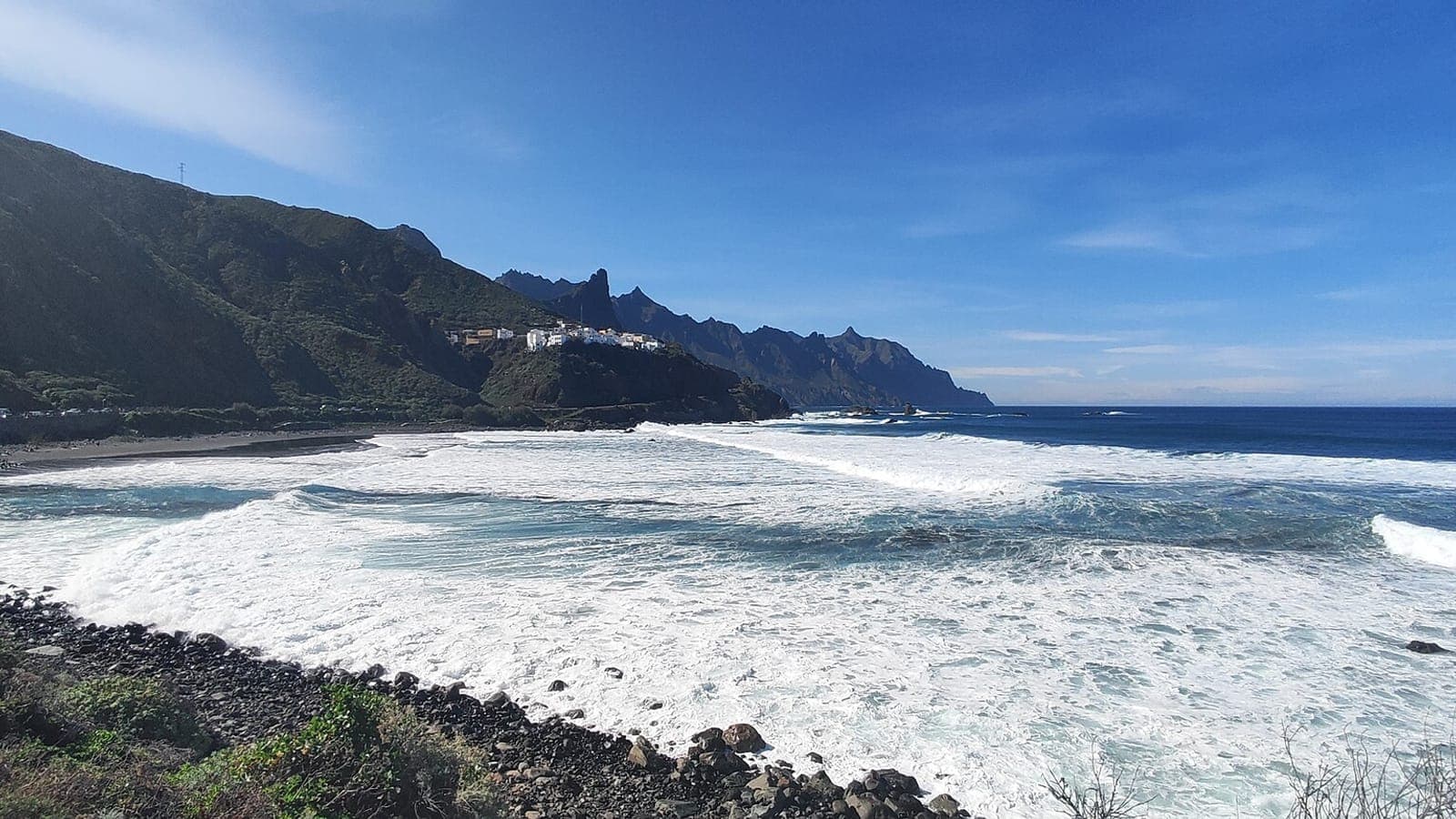
Vecina de Benijo pero menos conocida, la playa de Almáciga es la alternativa más tranquila para quienes quieren disfrutar de las playas de Anaga sin las (relativas) aglomeraciones de Benijo los fines de semana. La arena es igualmente negra y el paisaje igual de dramático, pero con menos visitantes.
El pueblo de Almáciga tiene un puñado de restaurantes locales que sirven pescado del día a precios increíbles — es uno de esos rincones de Tenerife donde el tiempo parece haberse detenido. La combinación de playa salvaje, comida excepcional y pueblo auténtico hace de Almáciga una excursión perfecta para un día completo.
Otras playas de arena negra destacadas
Playa de Los Patos — La Orotava (El Rincón)
Playa nudista accesible solo a pie, Los Patos es una extensión salvaje de arena negra entre acantilados impresionantes. Es la playa más grande y menos accesible de La Orotava — si buscas naturaleza en estado puro y no te importa caminar, es una experiencia única.
Playa de Las Gaviotas — Santa Cruz
A pocos minutos de la capital, esta playa nudista/mixta de arena negra es el escape de playa favorito de los santacruceros. Protegida del viento y con aguas relativamente tranquilas, es ideal para un baño rápido después del trabajo.
Playa Mesa del Mar — Tacoronte
Una pequeña cala de arena negra protegida por un espigon artificial que crea una piscina natural de aguas tranquilas. Perfecta para familias con niños pequeños que quieren experimentar la arena volcánica con la seguridad de aguas calmadas.
Consejos prácticos para playas de arena negra
Calor de la arena
La arena negra absorbe mucho más calor que la arena clara. En verano, puede quemar los pies descalzos, especialmente entre las 12 y las 16 horas. Lleva siempre sandalias o escarpines para caminar por la arena, y coloca tu toalla temprano para evitar el calor máximo.
Oleaje y corrientes
Las playas del norte y oeste de Tenerife suelen tener más oleaje que las del sur. Respeta siempre las banderas de seguridad y no subestimes la fuerza del Atlántico. Si no eres buen nadador, elige playas con socorristas como Playa Jardín o Playa de la Arena.
Mejor época
Las playas de arena negra son disfrutables todo el año gracias al clima de Tenerife. Los meses de verano (junio-septiembre) ofrecen las aguas más cálidas y el mar más calmado. En invierno, el oleaje es más espectacular pero el baño puede ser más desafiante.
Qué llevar
Protección solar de alto factor (la arena negra refleja menos UV pero el sol canario es fuerte), agua abundante, sandalias, y una toalla oscura — las manchas de arena volcánica son difíciles de quitar de toallas blancas.
Curiosidad: La arena negra de Tenerife tiene propiedades minerales beneficiosas para la piel. Los locales la usan tradicionalmente para aliviar dolores musculares y problemas de piel — enterrar las piernas en arena caliente volcánica es un remedio popular canario que sigue practicandose hoy. FAQ: Playas de arena negra en TenerifeEs seguro bañarse en las playas de arena negra?
Si, siempre que respetes las banderas de seguridad. Muchas playas de arena negra como Playa Jardín tienen socorristas y Bandera Azul, y Playa de la Arena cuenta con socorrismo y servicios completos. Las playas más salvajes como Benijo o Bollullo requieren más precaución por el oleaje.
La arena negra mancha la ropa?
La arena volcánica puede dejar marcas temporales en ropa clara y toallas blancas. Recomendamos usar toallas oscuras y sacudir bien la ropa antes de guardarla. Los residuos se eliminan fácilmente en la lavadora.
Hay playas de arena negra aptas para niños?
Si. Playa Jardín en Puerto de la Cruz es la más indicada — tiene aguas relativamente tranquilas, socorristas y todos los servicios. Playa de la Arena también es buena opción. Mesa del Mar en Tacoronte tiene aguas muy calmadas.
Cuál es la playa de arena negra más bonita?
Es subjetivo, pero Benijo en Anaga suele ganar este título por su paisaje dramático con los Roques emergiendo del mar. Para belleza más accesible, Playa de la Arena con sus acantilados de Los Gigantes al fondo es espectacular.
Se puede llegar en transporte público?
Playa Jardín y Playa del Socorro son accesibles en guagua. Playa de la Arena tiene servicio de autobús desde Costa Adeje. Las playas de Anaga (Benijo, Almáciga) tienen servicio limitado — un coche de alquiler es recomendable.
Descubre más playas de Tenerife
La isla ofrece playas para todos los gustos — desde calas secretas hasta extensas playas doradas.
Explora las piscinas naturales de Anaga o descubre los mejores spots de snorkel
Reserva tu experiencia en Tenerife
Actividades, tours y entradas con cancelación gratuita.
Enlaces de afiliado: si reservas a través de este bloque, GetYourGuide nos paga una comisión. A ti no te cuesta más.
Ver actividades y entradas en GetYourGuideArtículos Relacionados

Las Playas de Arena Negra de Tenerife: Únicas e Imperdibles
Las playas de arena negra de Tenerife son una maravilla volcánica que ofrecen vistas impresionantes y experiencias únicas. Descubre los lugares imprescindibles.
Descubre las Playas Ocultas de Tenerife
Explora las playas más bonitas y ocultas de Tenerife, lejos de las multitudes turísticas. Encuentra consejos sobre cómo llegar a estos rincones apartados y los mejores momentos para visitarlos.
Playas de arena negra de Tenerife: por qué son únicas y cuáles visitar
Explora las fascinantes playas de arena negra de Tenerife, un paraíso volcánico. Descubre su encanto único y cuáles visitar para una experiencia inolvidable.