Güímar
The mysterious Pyramids of Güímar and a farming valley with its own microclimate.
History
In the period before the Castilian conquest, the Valley of Güímar was one of the nine menceyatos or kingdoms into which the island of Tenerife was divided. During the conquest, in the final years of Guanche independence, its mencey was Añaterve, successor of Acaymo, who had been mencey before him (possibly his father), and his court was based in the cave-palace of Chinguaro. The territory covered a broad area stretching from the summit down to the sea, including parts of the present-day municipalities of Güímar, Arafo, Candelaria and El Rosario. This menceyato holds a special place in the island's memory because of its link to the Virgin of Candelaria: according to the account recorded by the chronicler Friar Alonso de Espinosa, the Marian image was found by Guanche shepherds on the beach of Chimisay, in the lands of Güímar, almost a century before the conquest, and was kept first at Chinguaro and later in the cave of Achbinico, in neighbouring Candelaria, today the patron saint of the Canary Islands.
Güímar was one of the so-called "peace" menceyatos, which offered no armed resistance to the Castilian troops during the conquest of the island, completed in 1496. After its incorporation into the Crown of Castile, the valley retained for generations a notable Guanche population, part of which kept its identity until the seventeenth century thanks to the relative isolation of the midland districts. The new colonial order was built upon the former aboriginal settlement, with land and water grants and the arrival of settlers.
From the sixteenth century the valley's economy was based on agriculture, favoured by a mild microclimate and by the richness of its volcanic soils. The first crops of sugar cane and cereal were followed, in the seventeenth and eighteenth centuries, by a thriving wine production that became a hallmark of the district. The Valley of Güímar, open to the sea and sheltered by the mountain ridge, offered ideal conditions for a midland agriculture that supplied much of the island.
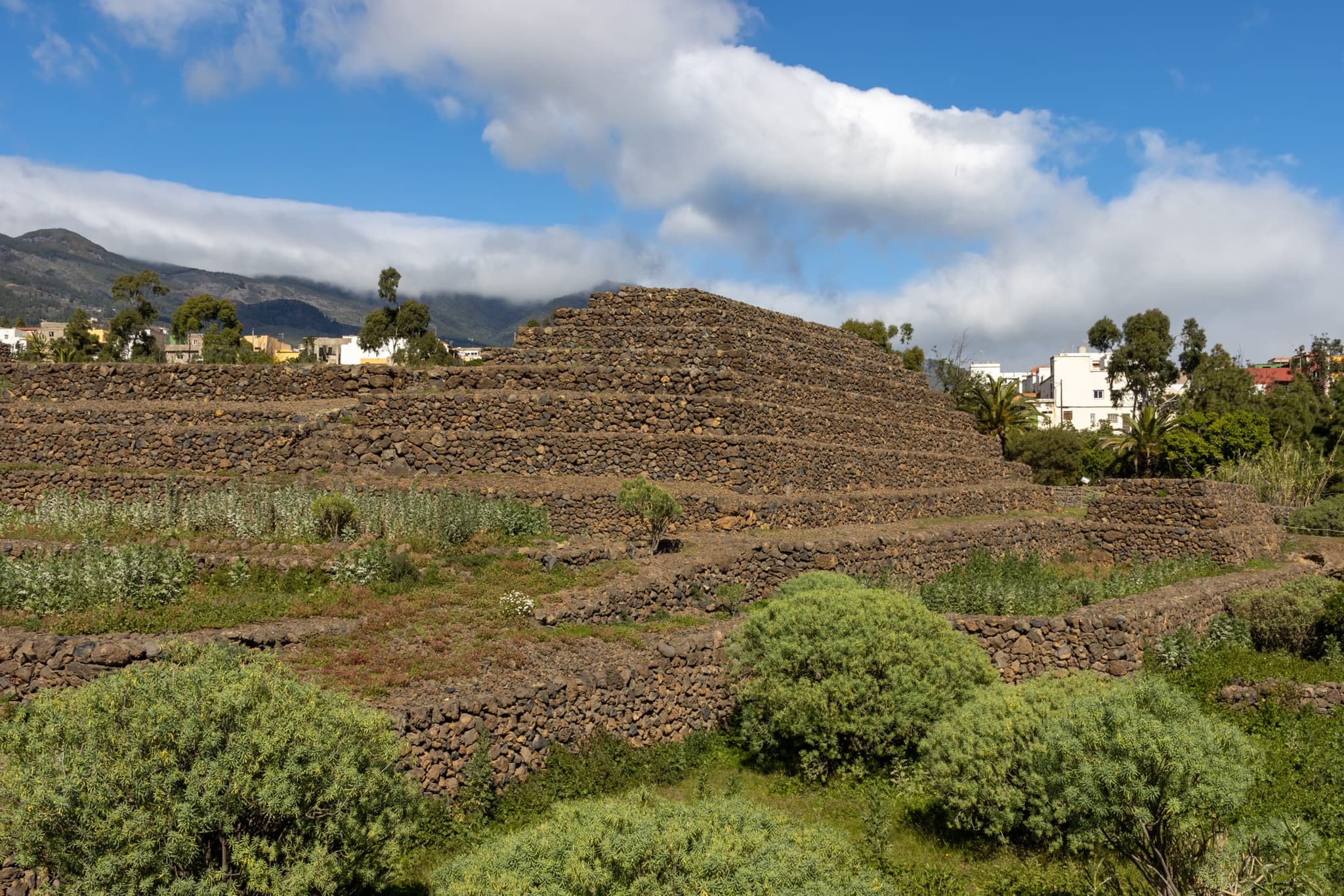
Among the most singular and debated features of the Güímar landscape are the Pyramids of Güímar, a group of stepped dry-stone structures located in the district of Chacona. Several hypotheses about their origin coexist, and none should be taken as proven. The most widely held interpretation within the archaeological community links them to agricultural activity: they would be orderly piles of stone (majanos) resulting from the clearing of cultivation plots, a common practice in the Canary Islands. By contrast, the Norwegian researcher Thor Heyerdahl, who settled in Tenerife and promoted the Ethnographic Park in 1998, argued for a possible astronomical or ritual meaning and pointed to formal similarities with structures of other cultures. His work saved the site from disappearing under an urban-development project, although his theories about the origin do not enjoy consensus support. To this day, the debate over the dating and purpose of these structures remains open.
Another natural landmark of the municipality is the Malpaís de Güímar, on the coastal strip. It is a landscape of purely volcanic origin, declared a natural site of national interest in 1987 and reclassified as a Special Nature Reserve in 1994, dominated by the cone of Montaña Grande and by extensive, geologically young lava fields that shelter one of the finest examples of cardón-and-spurge scrubland in the archipelago.
The historic centre of Güímar preserves the layout and traditional Canarian architecture around the Mother Church of San Pedro Apóstol. The church originated in a chapel built at the beginning of the seventeenth century and was enlarged and remodelled between the late eighteenth and early nineteenth centuries until it reached its present three naves, with a tower completed in the first third of the nineteenth century. Güímar gained the status of municipality in 1812, the title of villa in 1900 and that of city in 1961.
Today Güímar is a city of just over twenty thousand inhabitants that combines the agricultural activity of the valley, services, an industrial estate and a natural and cultural heritage that attracts visitors interested in the Guanche legacy, the Ethnographic Park, the Malpaís and its traditions, keeping alive the memory of one of the most important kingdoms of pre-Hispanic Tenerife.
Points of interest
Pirámides de Güímar (Parque Etnográfico)
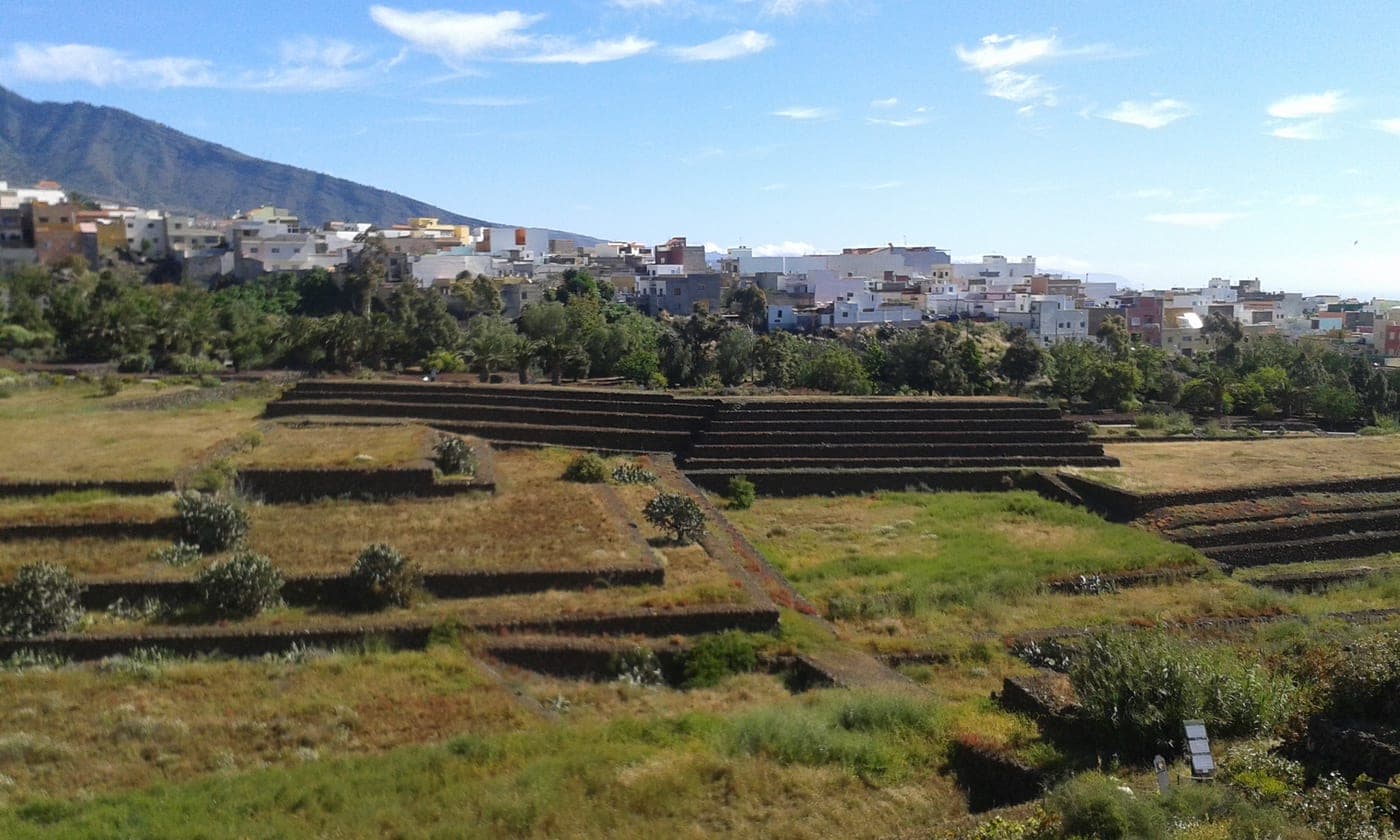
In the district of Chacona stands this group of six large stepped structures of dry basalt stone, arranged in terraces, that give their name to the Ethnographic Park. Their origin is debated: the hypothesis most accepted by archaeology interprets them as majanos, piles of stone left over from clearing cultivation plots, while the Norwegian researcher Thor Heyerdahl, who promoted the park in 1998, argued for a possible astronomical or ritual value and similarities with pyramids of other cultures; neither theory is proven. The site, which saved the structures from disappearing under an urban-development plan, offers paths among the terraces, gardens with Canarian and other flora, an auditorium and exhibition halls on ancient navigations. It is one of the most visited spaces in the municipality and a good place to explore, with a critical eye, this riddle of the Güímar landscape.
Malpaís de Güímar
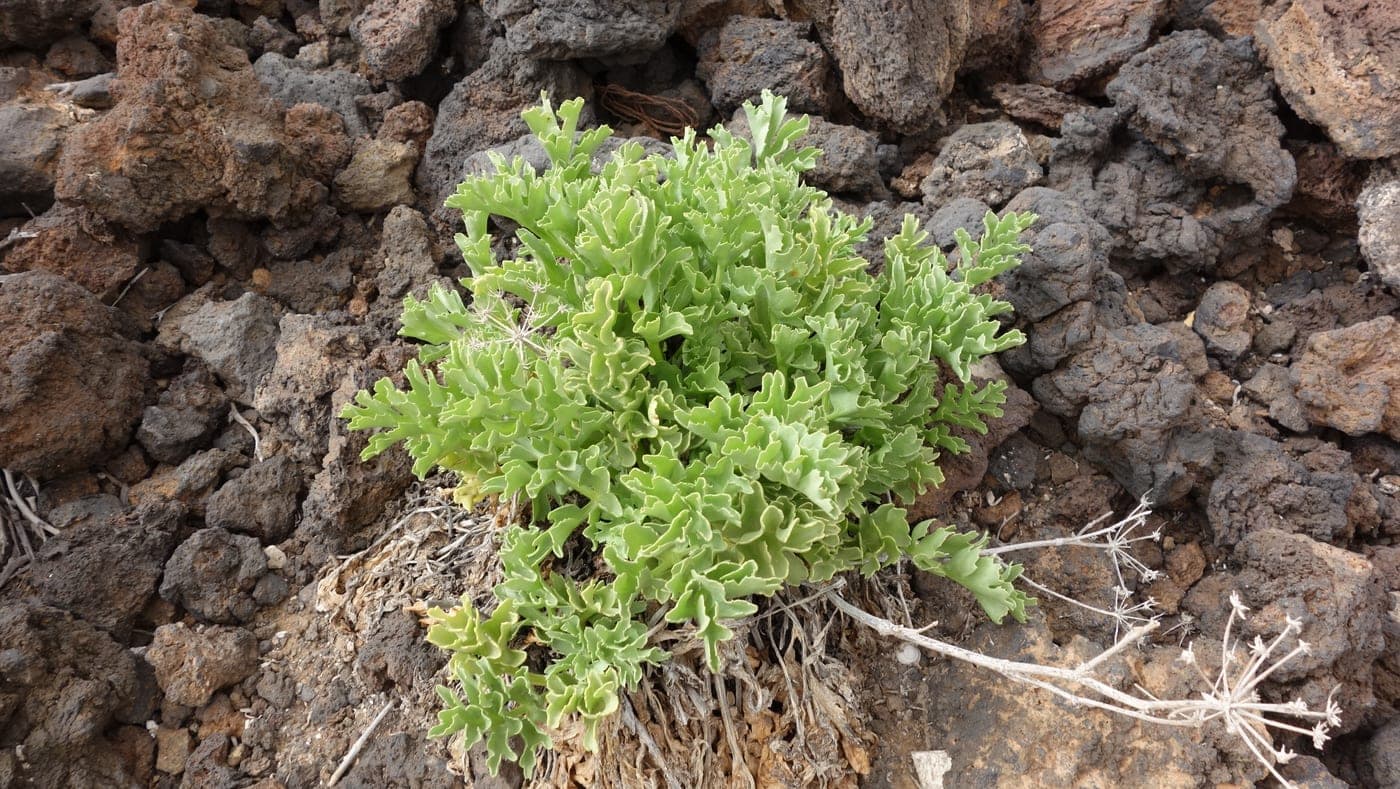
Along the municipality's coast lies this Special Nature Reserve, a landscape of purely volcanic origin covering about three square kilometres. Declared a natural site of national interest in 1987 and reclassified as a reserve in 1994, it is dominated by the cone of Montaña Grande and by geologically young lava fields. It shelters one of the finest examples of cardón-and-spurge scrubland in the archipelago, an arid-zone plant formation now scarce in the south of the island, as well as volcanic tubes such as Cueva Honda, home to invertebrates adapted to darkness. Marked trails let you cross the lava field among flows, cones and native vegetation, with views of the sea and the coastal strip. It is a space of great ecological value, best visited while respecting the signage and the fragility of the surroundings.
Montaña Grande
Montaña Grande is the volcanic cone that presides over the Malpaís de Güímar, rising about 276 metres above sea level. Its crater, of large diameter and several tens of metres deep, has an asymmetrical profile attributed to the prevailing wind during the eruption. It is a geologically recent volcano, part of the municipality's coastal nature reserve, and one of its most recognisable scenic landmarks. From its slopes and the surrounding trails there are wide panoramas of the coastline, the lava flows and the cardón-and-spurge scrubland that colonises the lava field. The ascent and nearby routes allow a close look at the area's volcanic geology; they should be done along the established paths to protect a sensitive ecosystem.
Iglesia Matriz de San Pedro Apóstol
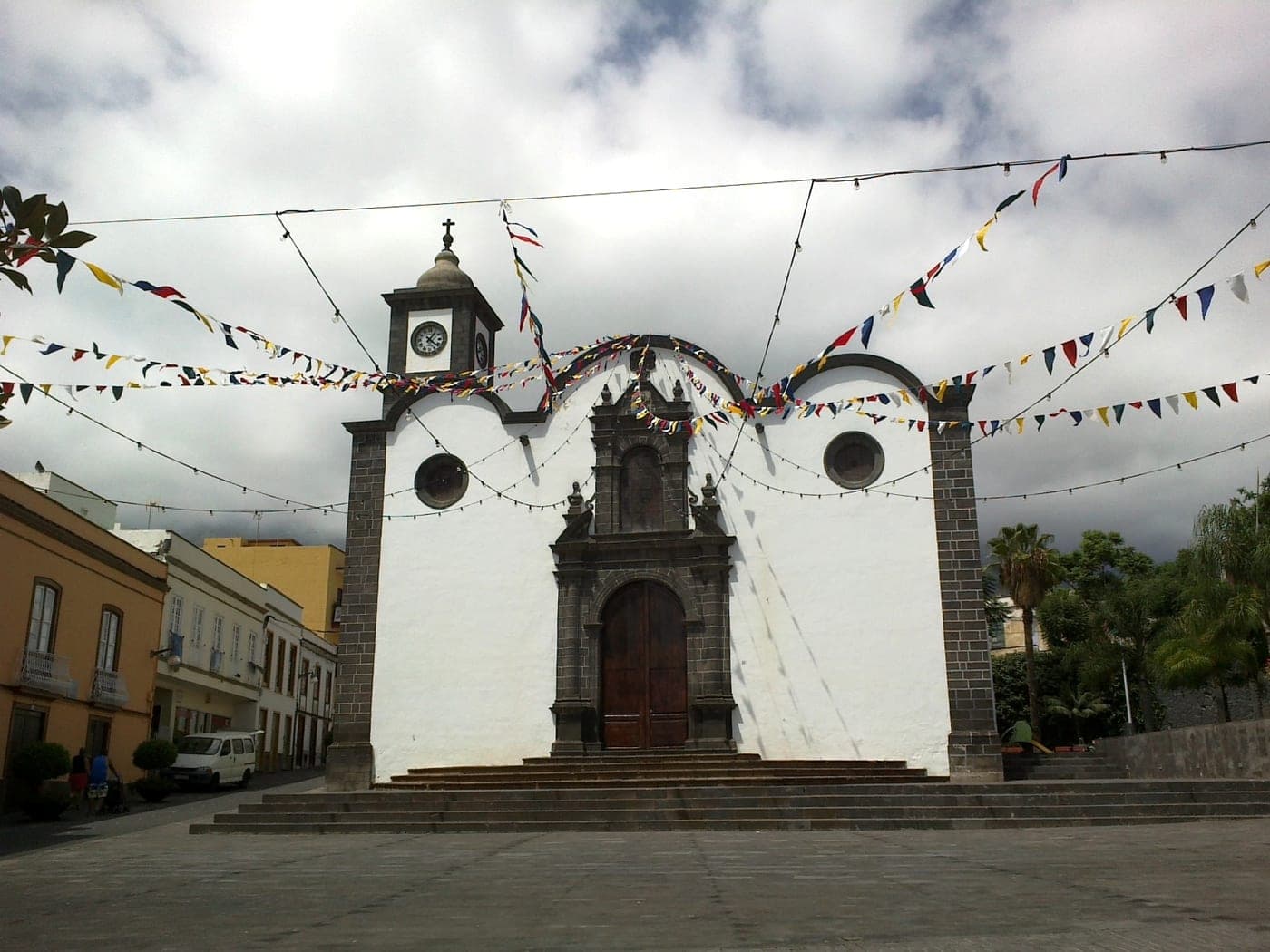
The main church of Güímar and the religious heart of the historic centre, it is dedicated to Saint Peter the Apostle, patron of the city. It originated in a chapel built at the start of the seventeenth century, which gained parish status when, around 1630, it was granted the keeping of the Blessed Sacrament and a baptismal font. Faced with its deterioration, the enlargement works begun in the late eighteenth century and continued into the early nineteenth gave it its present three naves and greater height, with a Baroque-style stone doorway; the tower was built in the first third of the nineteenth century in a more Classicist style. Inside it preserves altarpieces, images and works of sacred art from various periods. It is one of the municipality's most representative monuments and the central setting of the June patron festivities.
Casco histórico de Güímar
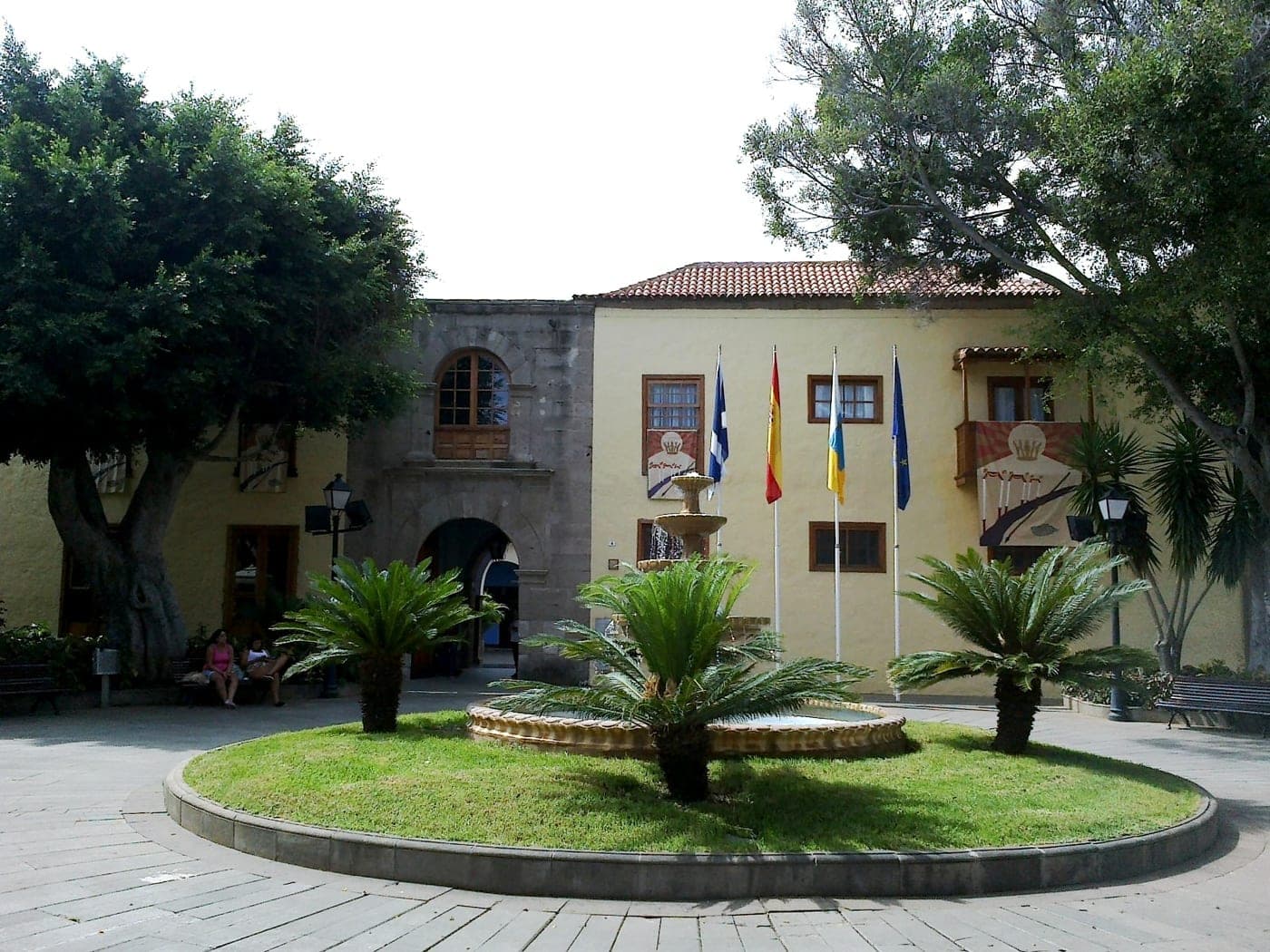
The historic centre of Güímar preserves the urban layout and traditional Canarian architecture that took shape from colonial times around the Mother Church of San Pedro Apóstol. Cobbled streets, squares, large houses with wooden balconies, courtyards and whitewashed façades make up an ensemble of great island character, interspersed with civil and religious buildings from the seventeenth to the nineteenth centuries. Strolling through its fabric reveals chapels, old manor houses, spaces linked to the valley's agricultural and wine-making tradition, and corners that recall the town's historic past, declared a municipality in 1812 and a city in 1961. The centre concentrates much of Güímar's social and festive life and is the best starting point for exploring the municipality's heritage on foot.
Mirador de Don Martín
Set high on the Ladera de Güímar, beside the old southern main road, this viewpoint offers one of the most complete panoramas of the Valley of Güímar: the cultivation terraces, the houses descending towards the sea, the mountain ridge and, in the distance, the outline of the Anaga massif. Built in 1954 by the Cabildo of Tenerife, it was named in recognition of Don Martín Rodríguez y Díaz-Llanos, a local landowner and politician who promoted its creation; the design was by the architect Tomás Machado. In the 1950s and 1960s it was a tourist landmark, associated with a nearby parador, until the opening of the southern motorway reduced the flow of visitors. Today it remains an essential stop to admire the valley and an excellent spot for photography.
Things to do in Güímar
Where to eat in Güímar
What to see in Güímar
Official data
Published by the Cabildo de Tenerife and reused here unmodified.
Waymarked trails11
- PNT-21Corral del Niño - Yegua Blanca6.4 km+187 mOn footlinear
- SL-TF 901El Socorro - Puertito de Güímar (Camino de la mar)4.3 km+135 mOn footlinear
- SL-TF 900Circular Montaña Grande3.5 km+69 mOn footcircular
- PNT-17Igueque2.7 km+72 mOn footlinear
- SL-TF 904Camino del Socorro - Punta Los Picos2.4 km+49 mOn footlinear
- SL-TF 902Montaña Grande - Puertito de Güímar (Camino Samarines)1.8 km+5 mOn footlinear
and 5 more
Listed heritage sites13
- CAMINO DEL SOCORROHistoric siteOfficial gazette
- CAPILLA DE SAN PEDRO ABAJOMonumentOfficial gazette
- CAPILLA DE SAN PEDRO ARRIBAMonumentOfficial gazette
- CASA DEL PASEO Y CAPILLA DE SAN JUANHistoric siteOfficial gazette
- CASCO HISTÓRICO DE GÜIMARHistoric ensembleOfficial gazette
- COMPLEJO DE CHINGUAROHistoric siteOfficial gazette
and 7 more
Source: Cabildo Insular de Tenerife · CC BY · data from 2026-08-01 · How we use open data
Folklore & traditions
Güímar's main festivities are the patron celebrations of San Pedro Apóstol (Saint Peter the Apostle), held around 29 June with a broad programme of religious and popular events: masses, processions, open-air dances, concerts, sporting exhibitions and a notable Canarian wrestling tournament, one of the most deeply rooted in the district. The streets of the old town are decorated and the organisation falls alternately to the two traditional neighbourhoods, San Pedro de Arriba and San Pedro de Abajo, which take turns each year. Among the most cherished traditions are the ribbon dance (danza de las cintas), in which a group of boys and girls in colourful costumes weave and unweave ribbons attached to a pole, and the fruit arches (arcos de frutas), offerings that adorn the festive route and connect the celebration to the valley's agricultural character.
The municipality also keeps alive its deep historical roots through the Guanche link to the Virgin of Candelaria, whose discovery, according to tradition, took place on the shores of the former menceyato of Güímar before the conquest. That aboriginal past, together with the legacy of the Pyramids Ethnographic Park, feeds a local identity that blends the pre-Hispanic, the religious and the agricultural. Throughout the year there are also pilgrimages and festivals in the various neighbourhoods and hamlets of the municipality, where Canarian folklore reappears with traditional costumes, dancing and string music.
Gastronomy accompanies every celebration and reflects the valley's larder. At the San Pedro festivities, milk bread (pan de leche) and rosquetes, traditional sweets shared among family, are typical, and the local white wine is never missing, a star of both the cuisine and popular sayings. The Valley of Güímar is a recognised wine-growing area, with protected wines that continue a centuries-old tradition, and its table is rounded off with local farm produce, cheeses, potatoes, mojo sauces and dishes of Canarian cooking that bring flavour to the festive days.
Photos: Mike Peel (www.mikepeel.net) (CC BY-SA 4.0) · Axel Cotón Gutiérrez (CC BY-SA 4.0) · Tanja Freibott (CC BY-SA 4.0) · rene boulay (CC BY-SA 3.0) · rene boulay (CC BY-SA 3.0) · Wikimedia Commons